How to Get Rid of Fruit Flies Fast (and Stop Them Coming Back)
How to get rid of fruit flies in your kitchen in a few days, the DIY vinegar trap that works best, where they're breeding, and the traps worth buying.
We earn a commission if you buy through links on this page, at no extra cost to you. Learn more.
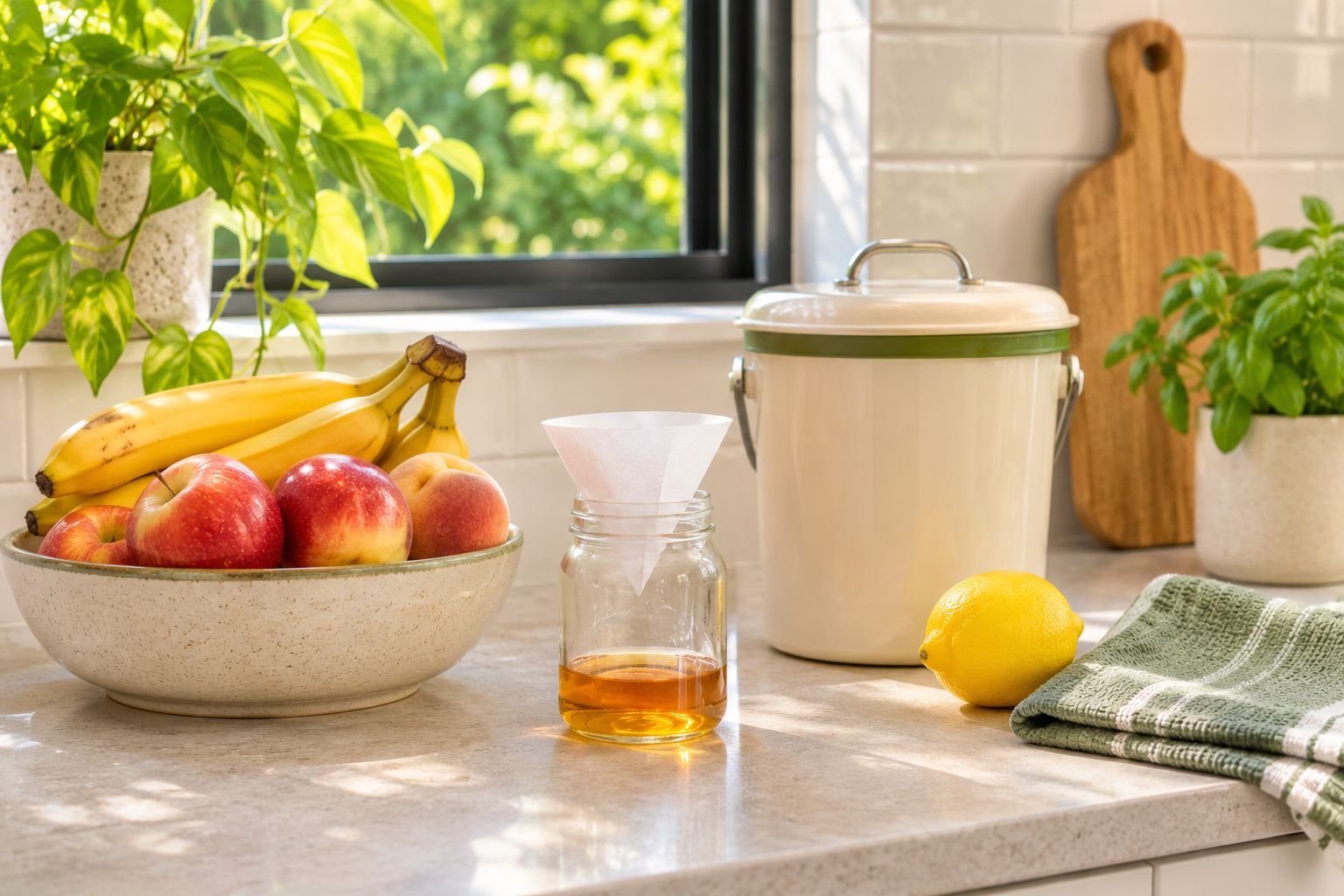
The short answer
To get rid of fruit flies, first remove what they're breeding in: overripe fruit, open compost, the bin, sticky bottles and cans, and sometimes the sink drain. Then trap the adults with a jar of apple cider vinegar and a drop of dish soap, or a paper-cone vinegar trap. Put fruit in the fridge, empty and rinse your compost caddy every couple of days, and keep trapping for a week to catch flies that hatch from eggs already laid. Ready-made traps like TERRO or a plug-in light trap help if they keep coming back.
- Traps only catch adults. You must find and remove the breeding site, or they'll keep coming.
- The best DIY trap is apple cider vinegar plus a drop of dish soap.
- Overripe fruit, compost caddies, bins, recycling and drains are the usual culprits.
- Keep trapping for 7–10 days to catch flies hatching from eggs already laid.
- Store fruit in the fridge and rinse bottles before recycling to stop them coming back.
Fruit flies seem to appear out of nowhere, especially in warm weather, and then multiply fast. The good news is they’re easy to get rid of once you know the trick: traps catch the adults, but you have to remove what they’re breeding in, or a new batch hatches every few days.
This guide shows you how to get rid of fruit flies in a few days, the DIY trap that works best, where to look for breeding sites, and the ready-made traps worth buying if they keep coming back.
All products were checked on Amazon US and Amazon Australia.
How to get rid of fruit flies: the 3-step plan
- Find and remove the breeding site (the step most people skip).
- Trap the adults with apple cider vinegar or a ready-made trap.
- Keep it up for 7–10 days so you catch flies hatching from eggs already laid.
The University of Kentucky’s entomology fact sheet is blunt about it: unless breeding sites are removed or cleaned, the problem continues no matter how often you spray the adults.
Step 1: Find where they’re breeding
Fruit flies lay eggs on anything moist and fermenting. Check these places:
| Where | What to do |
|---|---|
| Fruit bowl | Eat, freeze or bin anything overripe; store fruit in the fridge for a week |
| Pantry potatoes and onions | Check for one soft, rotting one at the back |
| Kitchen compost caddy | Empty and rinse every 1–2 days; keep the lid closed |
| Rubbish bin | Wash out spills and sticky residue |
| Recycling | Rinse bottles, cans and jars before they go in |
| Sink drain | Scrub with a stiff brush and hot water |
| Mops, sponges and cloths | Wash or replace damp, sour ones |
| Wine, juice and vinegar bottles | Close tightly or keep in the fridge |
The University of Wisconsin–Madison Extension says the most common fruit fly breeding sites are overly ripe, fermenting fruits or vegetables, and suggests checking stored onions, potatoes and squash that may be out of sight.
Is it the drain? Tape a clear plastic bag or cling film over the plughole overnight. If flies are trapped under it in the morning, they’re breeding in the drain.
Step 2: Trap the adults
The best DIY fruit fly trap
You need apple cider vinegar, a jar or small glass, dish soap and, optionally, paper for a cone.
- Pour 2–3 cm of apple cider vinegar into a jar or glass.
- Add one drop of dish soap and swirl gently.
- Either leave it open, or roll a paper cone with a small hole at the tip and sit it in the jar’s mouth, tip down.
- Place it right where you see the flies, next to the fruit bowl or bin.
- Refresh it every few days.
Why it works: the vinegar smells like fermenting fruit, and Nebraska Extension explains that dish soap acts as a surfactant, reducing the surface tension of the vinegar so flies sink into the liquid when they land on it.
Michigan State University Extension recommends two simple designs: a jar with a homemade paper cone, or small glasses or bowls filled about two-thirds with apple cider vinegar.
No apple cider vinegar? A splash of red wine, beer, or a piece of very ripe banana in a jar with plastic wrap poked with small holes works too.
Ready-made traps worth buying
If you’d rather not keep a jar of vinegar on the bench, or the flies keep returning, these work well alongside good kitchen hygiene.
| Feature | Best ready-made trapTERRO Fruit Fly Trap (6-pack) | Best plug-in trapZevo Flying Insect Trap (plug-in) | Best kitchen caddyOXO Good Grips Easy-Clean Compost Bin (6.6 L) |
|---|---|---|---|
| Best for | A no-mess trap for the fruit bowl and kitchen bench | Ongoing fruit flies and fungus gnats in kitchens and plant rooms | Collecting food scraps in the kitchen before they go outside |
| Price band | Budget | Mid-range | Budget |
| Type | Lure trap | Light + sticky card | Kitchen caddy |
| Power | None | Plugs into a wall socket | — |
| Safe around food | Yes | Yes | — |
| Capacity | — | — | 1.75 gal (6.6 L) |
| Pest-resistant | — | — | Indoor use |
| Where to buy | Check price | Check price | Check price |
TERRO fruit fly trap: best ready-made trap
Small apple-shaped traps with a non-toxic food lure. Flies get in but can’t get out, and the window shows when it’s time to replace them. With more than 95,000 ratings, it’s one of Amazon’s most-reviewed pest products.
The trade-offs: it works more slowly than a fresh vinegar trap, and like every trap it won’t fix the problem unless you remove the breeding site.
Zevo plug-in insect trap: best for ongoing problems
A plug-in trap that uses light to lure fruit flies and fungus gnats onto a hidden sticky card. There are no sprays or smells, and it works around the clock. It’s handy if you have houseplants with fungus gnats too.
The trade-offs: refill cards add up, and the US version has a US plug, so our Australian link shows local plug-in traps.
OXO Easy-Clean compost caddy: stop them breeding
A smelly, open scrap bucket is a fruit fly nursery. A lidded, easy-to-wash caddy that you empty every couple of days takes away their favourite breeding spot.
Step 3: Keep them from coming back
- Store ripe fruit in the fridge, especially bananas, peaches, tomatoes and grapes in summer.
- Wash produce when you get home, to remove eggs that hitched a ride from the shop.
- Empty the compost caddy every 1–2 days and rinse it.
- Rinse bottles and cans before recycling, and take the recycling out often.
- Wipe up spills of juice, wine and soft drink quickly.
- Scrub the sink drain weekly with a brush and hot water.
- Keep a trap out in late summer and autumn when fruit flies peak.
Fruit flies vs fungus gnats vs drain flies
| Pest | Looks like | Found near | Fix |
|---|---|---|---|
| Fruit fly | Tan body, red eyes | Fruit, bins, compost | Remove fermenting food, vinegar traps |
| Fungus gnat | Tiny, black, slender | Houseplant soil | Let soil dry out, yellow sticky traps |
| Drain fly | Fuzzy, moth-like wings | Sinks, showers, drains | Scrub drains with a brush |
Composting at home? See our guide to the best compost bins and how to organize a pantry.
Common questions
What kills fruit flies instantly?
A jar of apple cider vinegar with a drop of dish soap is the quickest, safest trap. The soap breaks the surface tension so flies sink and drown. Fly sprays kill adults on contact but don't stop new flies hatching, so removing breeding sites matters more.
Why do I suddenly have fruit flies?
Fruit flies arrive on produce from the shop and breed fast in anything fermenting, like overripe fruit, juice, wine, compost or a damp drain. One forgotten potato or onion at the back of the pantry can produce hundreds of flies.
How long does it take to get rid of fruit flies?
Usually 3–7 days once the breeding site is removed. Keep a trap out for 7–10 days to catch flies emerging from eggs already laid.
Where do fruit flies lay eggs?
On the surface of fermenting, moist food, such as overripe fruit, vegetable scraps, spills in bins, the film inside drains, damp mops and cloths, and bottles or cans with a little drink left in them.
How do I know if fruit flies are breeding in my drain?
Tape a clear plastic bag or a piece of cling film over the drain overnight. If flies are trapped underneath in the morning, they're breeding in it. Scrub the drain with a stiff brush and clean it daily for a week.
Are fruit flies and fungus gnats the same?
No. Fruit flies are tan with red eyes and hang around fruit and bins. Fungus gnats are tiny, dark and slender, and hover around houseplant soil. Gnats need drier soil and sticky traps instead.
Does white vinegar work for fruit flies?
Not as well. Fruit flies are drawn to the fermented fruit smell of apple cider vinegar, wine or beer. White vinegar works poorly.
Sources
Keep reading
The Best Cordless Vacuum for Hardwood Floors (That Won't Scratch Them)
The best cordless vacuums for hardwood floors, why a soft roller head matters, wet-dry picks for sticky spills, and how to vacuum wood without scratches.
The Best Robot Vacuum for Pet Hair: Self-Emptying, Tangle-Free and Mess-Avoiding Picks
The best robot vacuums for pet hair, which features matter for dogs and cats, whether self-emptying is worth it, and how to avoid the pet-mess disaster.
How to Clean Hardwood Floors (Without Damaging the Finish)
How to clean hardwood floors the right way, daily, weekly and deep cleaning, what never to use, and how to fix dull, sticky or streaky timber floors.