The Best Cordless Vacuum for Hardwood Floors (That Won't Scratch Them)
The best cordless vacuums for hardwood floors, why a soft roller head matters, wet-dry picks for sticky spills, and how to vacuum wood without scratches.
We earn a commission if you buy through links on this page, at no extra cost to you. Learn more.
The short answer
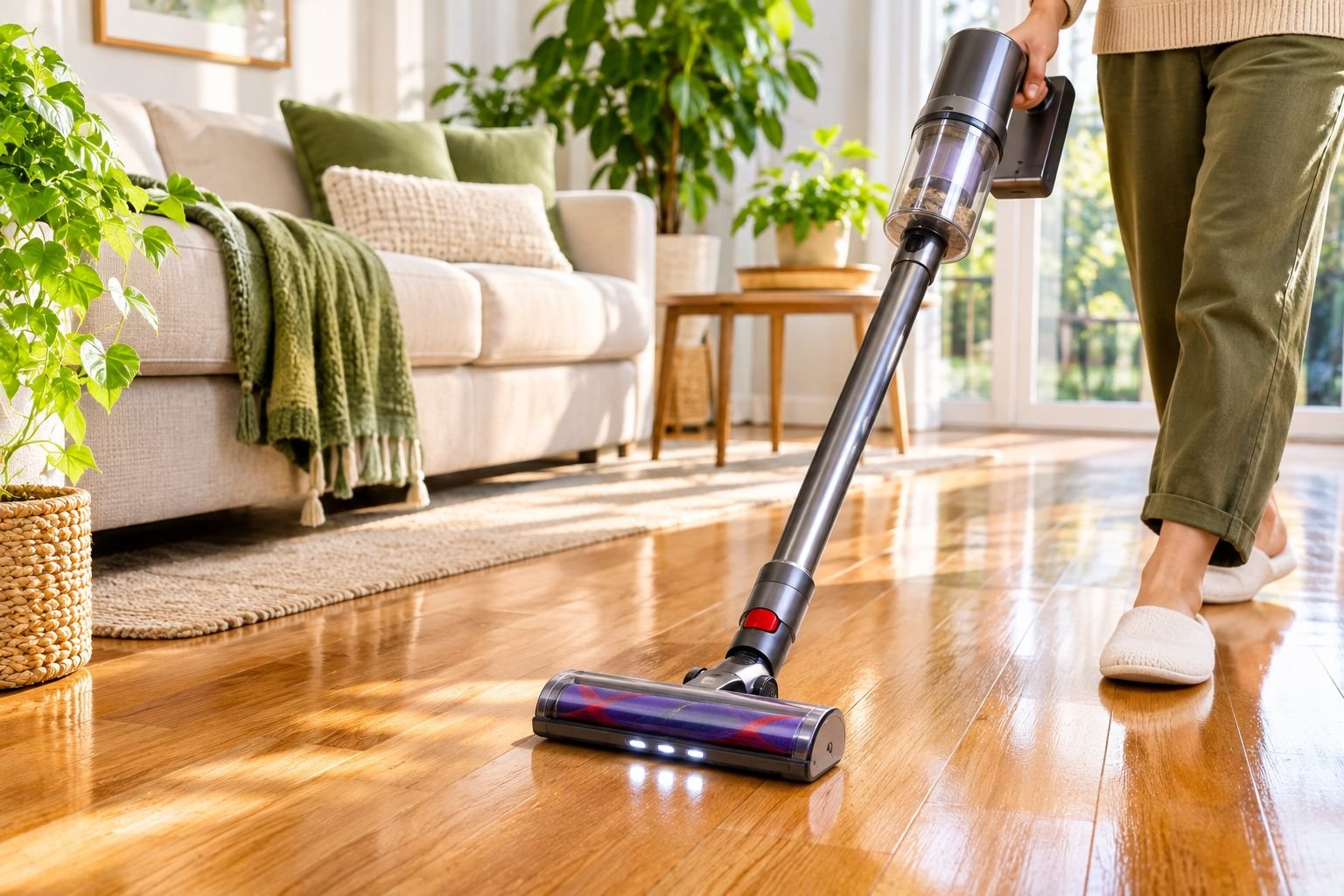
The best cordless vacuum for hardwood floors has a soft roller head, a fluffy cylinder that picks up fine dust and bigger crumbs without scratching or scattering. The Dyson V8 is the best value pick, with a soft-roller head made for hard floors. For the most thorough clean, the Dyson V15 Detect adds a laser that lights up hidden dust. On a budget, the BLACK+DECKER POWERSERIES+ is light and cheap for daily pick-ups. If you deal with sticky spills, a wet-dry vacuum like the Tineco iFLOOR 2 vacuums and mops in one pass, but only on sealed floors.
- A soft roller head is the most important feature for hardwood. It grabs dust and debris without scratching.
- Stiff spinning brush rolls can scatter debris and scuff soft finishes. Turn them off or swap heads on wood.
- Check that the wheels are soft rubber, not hard plastic, and keep them clean of grit.
- Wet-dry vacuums are great for sticky messes, but only on sealed floors and on the lightest water setting.
- Grit is what scratches wood. Vacuuming often is the best way to protect the finish.
Hardwood and timber floors look easy to keep clean, but they show every crumb, dust bunny and pet hair, and the wrong vacuum can make things worse. A stiff spinning brush flicks debris across the room and can leave fine scratches in the finish.
The fix is simple: a vacuum with a soft roller head. This guide picks the best cordless vacuums for wood floors at every budget, plus a wet-dry option for sticky spills, and explains how to vacuum timber without damaging it.
Our picks at a glance
| Feature | Best overallDyson V8 Cordless Vacuum | Premium pickDyson V15 Detect Cordless Vacuum | Budget pickBLACK+DECKER POWERSERIES+ 20V MAX Cordless Stick Vacuum |
|---|---|---|---|
| Best for | Mostly hard floors with a few rugs — light, powerful and easy to grab | Heavy shedders, allergies, big homes | Small homes and quick daily pick-ups on hard floors |
| Price band | Mid-range | Premium | Budget |
| Hard-floor head | Soft roller | — | Brush roll with LED |
| Run time | Up to about 40 min (eco) | — | — |
| Bin | Small | — | — |
| Converts to handheld | Yes | — | Yes |
| Runtime | — | Up to 60 min (eco) | — |
| Suction | — | 230 AW | — |
| Filtration | — | Whole-machine HEPA | — |
| Standout | — | Laser dust detection | — |
| Battery | — | — | 20V MAX |
| Where to buy | Check price | Check price | Check price |
Best overall: Dyson V8
The V8 is Dyson’s lightest and most affordable stick vacuum, and on hard floors it’s hard to beat for the money. Its soft-roller head is a fluffy cylinder that seals against the floor to suck up fine dust, while gently grabbing larger crumbs. You won’t hear the rattle of cereal being flicked across the room. It’s light enough for quick daily runs and converts to a handheld for stairs, couches and the car.
The trade-offs: the run time and bin are smaller than newer Dysons, and you have to hold the trigger down while you vacuum.
Best premium pick: Dyson V15 Detect
If you want the cleanest possible hard floors, the V15 Detect is the one to buy. Its soft-roller head shines a green laser along the floor that lights up dust you’d never see. On dark timber that’s oddly satisfying, and it shows you where you’ve missed. It also counts the particles it picks up and comes with a second head for carpets and rugs. We picked it for our pet hair vacuum guide too.
The trade-offs: it’s expensive and heavier than the V8.
Best budget pick: BLACK+DECKER POWERSERIES+
For a small apartment or quick daily pick-ups, the POWERSERIES+ is light, cheap and easy to grab. Its LED floor lights show up dust and crumbs on timber and tiles, and it converts to a handheld.
The trade-offs: it has less suction than the Dysons, and it uses a brush roll rather than a soft roller. Check it’s gentle on your floor finish and keep the bristles clean.
Best for sticky spills: Tineco iFLOOR 2 (wet and dry)
Kids, pets and kitchens mean sticky spills that a vacuum alone can’t fix. The Tineco iFLOOR 2 vacuums dry debris and wet mess while a damp roller cleans the floor, then sucks the dirty water into a separate tank. It’s a big time-saver on sealed floors.
Important: use it only on sealed (polyurethane) hardwood, on the lowest water setting, and make sure the floor dries within a minute or two. Never use it on oiled, waxed or unsealed timber. Not sure what you have? Do the water-drop test in our guide to how to clean hardwood floors.
What to look for in a vacuum for hardwood floors
1. A soft roller head
This is the single most important feature. A soft roller is a cylinder of soft nylon or felt-like material that:
- picks up fine dust, the grey haze you see in sunlight
- grabs larger debris instead of flinging it
- won’t scratch a soft finish
If a vacuum only has a stiff brush roll, check whether you can switch the brush off for hard floors.
2. Soft wheels
Hard plastic wheels can pick up grit and drag it across the floor. Soft rubber or rubber-edged wheels are kinder to wood. Wipe them clean now and then.
3. Good filtration
A sealed system with a fine filter (often labelled HEPA) traps fine dust instead of blowing it back out, which matters if anyone in the house has allergies.
4. Weight and run time
Most homes with mostly hard floors don’t need maximum suction. A lighter vacuum you’ll actually use daily beats a heavy one you put off. A 30–40 minute run time is plenty for most homes.
5. Two heads if you have rugs
If you have rugs or carpeted bedrooms, choose a vacuum with a soft roller and a brush-roll head, and swap between them.
Stick vacuum, robot or wet-dry: which do you need?
| Type | Best for | Watch out for |
|---|---|---|
| Cordless stick (soft roller) | Daily cleaning of hard floors and rugs | Battery life on big homes |
| Robot vacuum | Daily maintenance while you’re out | Misses corners and needs a stick vacuum for deeper cleans |
| Wet-dry vacuum mop | Sticky spills on sealed floors | Not for oiled, waxed or unsealed timber |
| Canister vacuum | Big homes and long sessions | Bulkier, with a cord |
How to vacuum hardwood floors without scratching them
- Use the soft roller or the hard-floor setting with the brush off.
- Vacuum often. Grit is what scratches wood, so remove it before it gets ground in.
- Vacuum with the grain of the boards and use a crevice tool along the gaps and skirting.
- Empty the bin and clean the roller regularly so trapped grit doesn’t drag across the floor.
- Check the wheels for stuck grit or stones.
- Put mats at every entry so less grit comes in at all.
Next step after vacuuming? Our guide to how to clean hardwood floors covers safe damp mopping.
Common questions
What type of vacuum is best for hardwood floors?
A cordless stick vacuum with a soft roller head is best for most homes. The soft, fluffy roller picks up fine dust and larger crumbs without scratching, and it doesn't flick debris around like a stiff brush roll. A canister vacuum with a dedicated hard-floor brush is a good corded alternative.
Can a vacuum scratch hardwood floors?
Yes. Stiff spinning bristles, hard plastic wheels and grit trapped under the head can all leave fine scratches, especially on soft or oiled finishes. Use a soft roller head or a hard-floor setting that stops the brush spinning, and keep wheels clean.
Is a soft roller or a brush roll better for hardwood?
A soft roller is better on hardwood. It seals against the floor to pick up fine dust and gently grabs larger debris. A stiff brush roll is better for carpet, where it digs into the pile, but on wood it can scatter crumbs and scuff the finish.
What's the best vacuum for hardwood and carpet?
Choose a stick vacuum that comes with two heads, a soft roller for hard floors and a brush-roll head for carpet and rugs, like the Dyson V15 Detect. Swap heads as you move between rooms.
Can I use a wet-dry vacuum on hardwood floors?
Only on sealed (polyurethane) hardwood, on the lowest water setting, and only if the floor dries within a minute or two. Never use one on oiled, waxed or unsealed timber. Check your floor manufacturer's advice first, because some don't allow any wet cleaning machines.
How often should I vacuum hardwood floors?
Every few days in busy areas like the kitchen, hallway and entry, and weekly elsewhere. Grit and sand act like sandpaper underfoot, so frequent vacuuming is the best way to protect the finish.
Are cordless vacuums powerful enough for hardwood floors?
Yes. Hard floors are the easiest surface for a vacuum, because there's no carpet pile to pull dirt out of. Even budget cordless vacuums do well on wood. Extra suction matters more for thick rugs and pet hair.
Sources
Keep reading
The Best Robot Vacuum for Pet Hair: Self-Emptying, Tangle-Free and Mess-Avoiding Picks
The best robot vacuums for pet hair, which features matter for dogs and cats, whether self-emptying is worth it, and how to avoid the pet-mess disaster.
How to Clean Hardwood Floors (Without Damaging the Finish)
How to clean hardwood floors the right way, daily, weekly and deep cleaning, what never to use, and how to fix dull, sticky or streaky timber floors.

Best Cordless Vacuums for Pet Hair: Picks from Budget to Dyson
Three cordless stick vacuums that handle dog and cat hair — a budget Bissell, a mid-range Dyson V11 and the Dyson V15 Detect — sold in the US and Australia.