How to Clean Hardwood Floors (Without Damaging the Finish)
How to clean hardwood floors the right way, daily, weekly and deep cleaning, what never to use, and how to fix dull, sticky or streaky timber floors.
We earn a commission if you buy through links on this page, at no extra cost to you. Learn more.
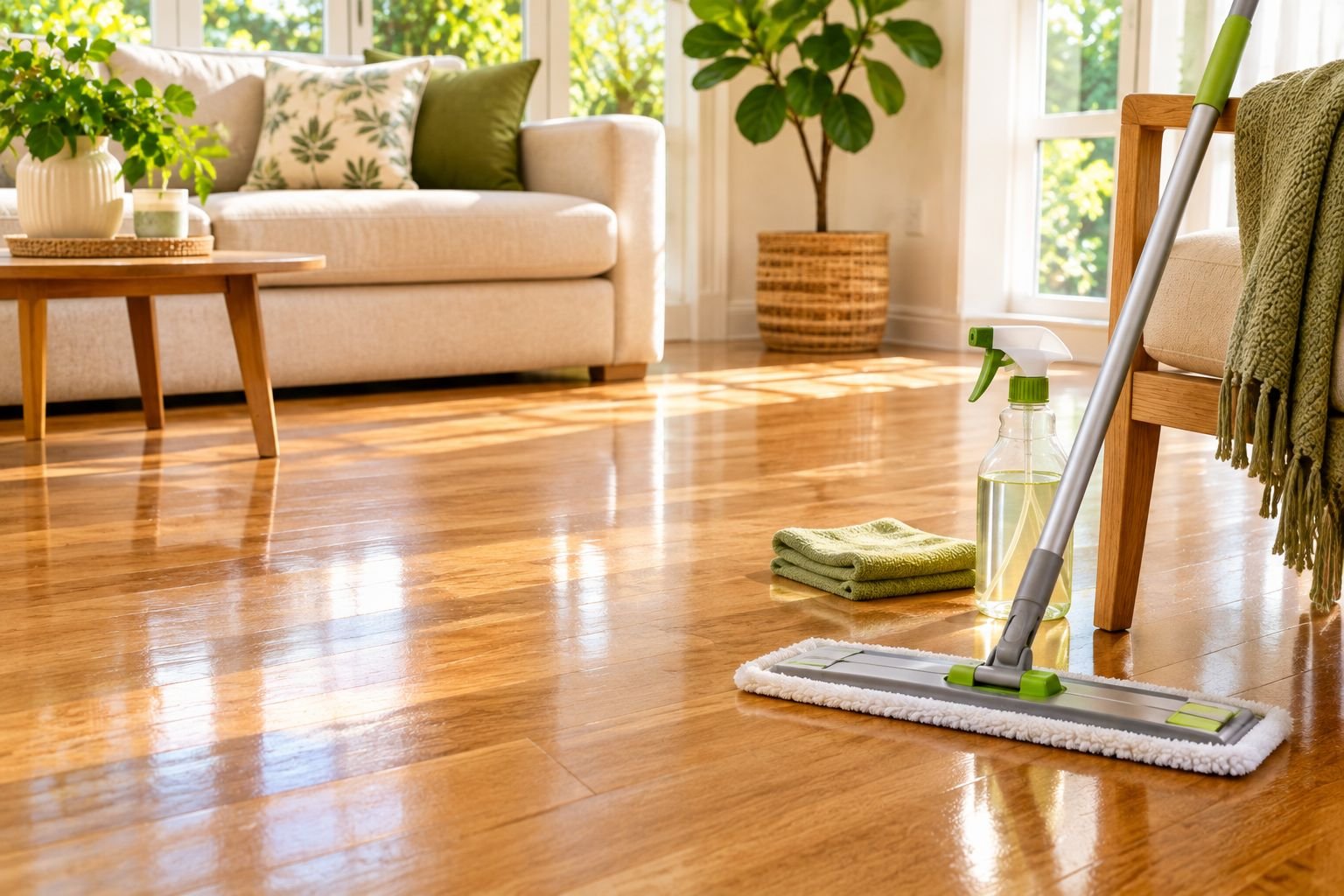
The short answer
To clean hardwood floors, first remove grit with a soft-bristle broom, dry microfibre mop or a vacuum on its hard-floor setting. Then mop with a barely damp microfibre mop and a pH-neutral wood floor cleaner, such as Bona, misting a small area at a time and never leaving puddles. Dry any wet spots straight away. Do this weekly, sweep daily in busy areas, and never use steam, soaking wet mops, vinegar, ammonia, bleach or oil soaps on sealed timber. These methods are for sealed (polyurethane) floors; waxed and oiled floors need their own products.
- Grit is the enemy. It acts like sandpaper, so sweep or vacuum before every mop.
- Use as little water as possible. A misted microfibre mop is all a sealed wood floor needs.
- Use a pH-neutral cleaner made for wood floors. Skip vinegar, steam, bleach and oil soaps.
- Do the water-drop test first to find out whether your floor is sealed, waxed or oiled.
- A dull, streaky floor is usually product build-up, not dirt.
Hardwood and timber floors are tough, but they’re easy to damage by cleaning them the wrong way. Too much water, the wrong cleaner or a steam mop can dull the finish, swell the boards and void your floor’s warranty. The good news is that the right routine is quick and cheap.
This guide starts with the one test most guides skip: finding out what finish your floor has. Then it covers the daily, weekly and deep-clean routine, what never to use, and how to fix the problems people ask about most: dull, sticky and streaky floors.
Step 1: Find out what finish your floor has
The right cleaning method depends on the finish, not the wood. Do this simple water-drop test in a low-traffic spot:
- Put a few drops of water on the floor.
- Wait 5–10 minutes.
| What happens | Your finish | How to clean it |
|---|---|---|
| Water beads up and sits on top | Sealed (polyurethane or similar). Most modern floors | This guide: damp mop with a pH-neutral wood floor cleaner |
| Water soaks in slowly and darkens the wood | Oiled or penetrating finish | Use the soap or cleaner recommended for oiled floors, and re-oil when dry-looking |
| Water soaks in and a white mark appears | Waxed (older floors) | Dry clean only, and use wax-floor products. Never use water-based cleaners |
Not sure? Check with the installer or floor manufacturer, and test any new product on a hidden spot first.
What you need
- A soft-bristle broom, dry microfibre mop or vacuum with a hard-floor setting (beater bar off)
- A flat microfibre mop, ideally a spray mop
- A pH-neutral cleaner made for wood floors
- A few microfibre cloths for spills and corners
Our picks for the job
| Feature | Best cleanerBona Hardwood Floor Cleaner | Budget mopPanda Grip Microfibre Spray Mop with Refillable Bottle | Premium mopBona Premium Spray Mop |
|---|---|---|---|
| Best for | Everyday cleaning of sealed (polyurethane) timber floors without streaks or residue | A cheap, refillable spray mop you can fill with any wood-safe cleaner | Large floors and people who want a sturdy, all-in-one mop kit |
| Price band | Budget | Budget | Mid-range |
| Type | pH-neutral wood floor cleaner | — | — |
| For | Sealed / polyurethane floors | — | — |
| Use | Spray and mop | — | — |
| Head | — | Flat microfibre | Wide microfibre |
| Pads | — | Washable | Washable |
| Bottle | — | Refillable | — |
| Cleaner | — | — | Cartridge (use the hardwood version on wood) |
| Where to buy | Check price | Check price | Check price |
The cleaner: Bona Hardwood Floor Cleaner is the product most floor installers recommend. It’s pH-neutral, water-based and dries without a film. Rated 4.6–4.7 stars by thousands of owners in the US and Australia.
A budget mop: the Panda Grip spray mop mists a fine spray from a refillable bottle, so you never overwet the floor. Fill it with a wood floor cleaner.
A premium mop: the Bona Premium Spray Mop has a wider head for big floors and a cartridge system. It ships with Bona’s hard-surface formula, so for timber floors buy the hardwood refill cartridges.
Step 2: Daily or every few days — remove grit
Grit and sand act like sandpaper underfoot. Removing them is the most important thing you can do for a wood floor.
- Dry-mop or sweep high-traffic areas: kitchen, hallway and entry.
- Vacuum weekly with the hard-floor setting. Turn off the spinning brush roll, or use a soft roller head, to avoid scratches.
- Wipe spills straight away with a damp microfibre cloth, then dry the spot.
If you have pets, you’ll need to vacuum more often. See our guide to the best cordless vacuums for pet hair.
Step 3: Weekly — damp mop the right way
- Vacuum or sweep first. Mopping over grit drags it across the finish.
- Use a clean microfibre pad. A dirty pad just spreads grime.
- Mist the cleaner onto a small area about 1 m² (10 sq ft) at a time, or onto the pad, not the whole floor.
- Mop with the grain of the boards, in smooth strokes.
- Never leave standing water. The floor should be dry within a minute or two. If it isn’t, you’re using too much.
- Swap or rinse the pad when it looks dirty, and machine-wash pads afterwards without fabric softener.
Step 4: A few times a year — deep clean
- Move furniture and clean underneath. Dust and grit collect there.
- Vacuum the gaps between boards with a crevice tool.
- Mop the whole floor with a fresh pad, working in sections.
- Check for worn, dull traffic lanes. If the finish is wearing through, plan a screen and recoat before the bare wood is damaged.
What never to use on hardwood floors
| Avoid | Why |
|---|---|
| Steam mops | Heat and moisture swell the boards and break down the finish |
| Soaking wet mops and buckets | Water seeps into seams and causes cupping and grey staining |
| Vinegar, ammonia, bleach | Too acidic or harsh, and they dull the finish over time |
| All-purpose sprays and abrasive cleaners | Leave residue or scratch the surface |
| Oil soaps and furniture polish on sealed floors | Leave a slippery film that dulls the floor and makes recoating harder |
| Beater-bar vacuums | Spinning bristles can scratch and wear the finish |
Fixing common hardwood floor problems
- Dull, cloudy floors: usually build-up from too much product, the wrong product or a dirty pad. Mop once with plain water on a clean pad, then use less cleaner.
- Sticky floors: the same cause, or leftover sugary spills. Rinse-mop with plain water, then dry.
- Streaks: too much cleaner or a dirty pad. Use a fresh pad and mist lightly.
- Fine scratches: a touch-up pen or wood floor refresher can hide light scratches. Deep scratches need sanding.
- Water marks: white marks are often in the finish and may fade as they dry out. Dark marks mean water reached the wood and may need a professional.
- Grey, cupped boards: a sign of moisture getting in. Fix the source (leaks, wet mopping) and get a flooring professional to assess.
How to protect your floors between cleans
- Put doormats inside and outside every entry.
- Fit felt pads under furniture legs and replace them when they wear.
- Use washable rugs in busy spots. See our guide to the best washable rugs.
- Keep pets’ claws trimmed.
- Close blinds in strong afternoon sun, which fades and dries timber.
- Keep indoor humidity steady, where you can, to limit gaps and cupping.
A wood floor that’s swept often and mopped lightly can look good for decades. Most damage comes from water and grit, not from the floor getting old.
Common questions
What is the best way to clean hardwood floors?
Remove grit first with a soft broom, dry microfibre mop or vacuum on the hard-floor setting. Then mop with a barely damp microfibre mop and a pH-neutral wood floor cleaner, working in small sections and drying any wet patches. That's all a sealed hardwood floor needs week to week.
Can you use vinegar on hardwood floors?
It's best not to on sealed floors. Vinegar is acidic, and over time it can dull and wear down the polyurethane finish. Most floor and finish manufacturers recommend a pH-neutral wood floor cleaner instead. A one-off spot clean won't ruin a floor, but don't use it as your regular cleaner.
Can you steam mop hardwood floors?
No. Steam pushes heat and moisture into the seams between boards, which can make the wood swell, cup and lose its finish. Many hardwood manufacturers say steam cleaning voids their warranty.
What should you not use on hardwood floors?
Avoid steam mops, soaking wet mops, vinegar, ammonia, bleach, all-purpose or abrasive cleaners, oil soaps on sealed floors, and furniture polish or "shine" products that leave a waxy film. Also avoid vacuums with a spinning beater bar on the wood, which can scratch it.
How often should you clean hardwood floors?
Sweep or vacuum high-traffic areas daily or every few days, mop with a wood floor cleaner about once a week (less in quiet rooms), and do a deeper clean a few times a year. Have a sealed floor screened and recoated every few years, depending on wear.
Why are my hardwood floors still dirty or sticky after mopping?
Usually it's residue, from too much cleaner, the wrong cleaner (like an all-purpose spray or oil soap), or a dirty mop pad spreading grime around. Mop once with plain water on a clean, barely damp microfibre pad to lift the build-up, then go back to a small amount of wood floor cleaner.
Should you mop wood floors?
Yes, but damp mop, never wet mop. A sealed wood floor can handle a light mist of cleaner on a microfibre pad. Buckets of water and string mops leave too much water on the surface, which seeps into seams and damages the wood over time.
How do I make my hardwood floors shine again?
First remove build-up by mopping with plain water on a clean microfibre pad. If the floor is still dull, the finish itself is worn. A wood floor polish or refresher designed for your finish can restore some shine, but a worn floor needs a professional screen and recoat.
How do I clean hardwood floors with pets?
Vacuum or dry-mop more often to pick up hair and grit, wipe up accidents straight away with a damp cloth and a wood-safe cleaner, and use an enzyme cleaner made for wood if there's a smell. Keep claws trimmed and put washable rugs in busy spots.
Sources
Keep reading
The Best Cordless Vacuum for Hardwood Floors (That Won't Scratch Them)
The best cordless vacuums for hardwood floors, why a soft roller head matters, wet-dry picks for sticky spills, and how to vacuum wood without scratches.
The Best Robot Vacuum for Pet Hair: Self-Emptying, Tangle-Free and Mess-Avoiding Picks
The best robot vacuums for pet hair, which features matter for dogs and cats, whether self-emptying is worth it, and how to avoid the pet-mess disaster.

Best Cordless Vacuums for Pet Hair: Picks from Budget to Dyson
Three cordless stick vacuums that handle dog and cat hair — a budget Bissell, a mid-range Dyson V11 and the Dyson V15 Detect — sold in the US and Australia.