The Best Robot Vacuum for Pet Hair: Self-Emptying, Tangle-Free and Mess-Avoiding Picks
The best robot vacuums for pet hair, which features matter for dogs and cats, whether self-emptying is worth it, and how to avoid the pet-mess disaster.
We earn a commission if you buy through links on this page, at no extra cost to you. Learn more.
The short answer
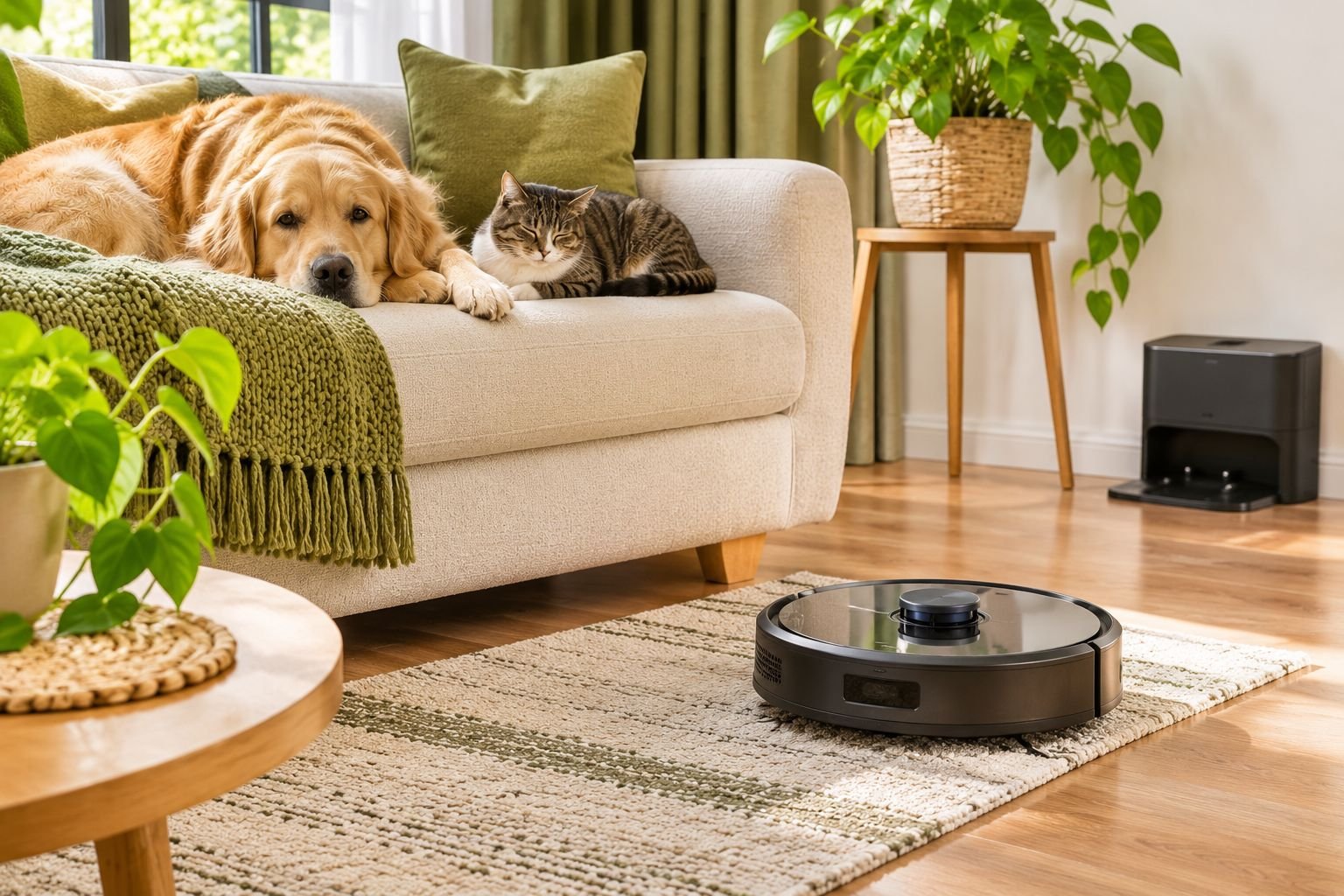
For most pet owners, the eufy C30 is the best-value robot vacuum for pet hair: strong suction, mopping and over 40,000 Amazon ratings. If you want to stop emptying the bin daily, the roborock Q7 M5+ self-empties into a base for weeks and maps your home accurately. For puppies and older pets, the iRobot Roomba j7+ is designed to spot and avoid solid pet waste, which is the worst-case scenario for any robot. Whichever you choose, run it daily, clean the brush weekly, and keep a cordless stick vacuum for stairs and furniture.
- Daily runs are the secret. A robot vacuum keeps pet hair under control rather than doing deep cleans.
- Rubber or tangle-resistant brushes are much easier to clean than bristle brushes in pet homes.
- Self-emptying bases are worth it with shedding pets, because the robot's bin fills fast.
- Obstacle avoidance matters if your pet ever has accidents indoors.
- You still need a stick vacuum for stairs, sofas and pet beds.
If you have a dog or cat, you know the pattern: you vacuum on Sunday, and by Tuesday there are tumbleweeds of hair under the couch again. A robot vacuum is the easiest way to break that cycle. It cleans every day while you’re at work, so hair never builds up.
But not every robot copes with pets. Long hair wraps around brushes, small bins fill in one run, and the worst-case scenario, a robot running over a pet accident, is a real risk. This guide picks robots that handle all three problems.
Our picks at a glance
| Feature | Best valueeufy C30 Robot Vacuum and Mop | Best self-emptyingroborock Q7 M5+ Robot Vacuum and Mop (self-emptying) | Best at avoiding pet messiRobot Roomba j7+ Self-Emptying Robot Vacuum |
|---|---|---|---|
| Best for | Pet owners who want strong suction and mopping for a fair price | Homes with shedding pets that don't want to empty the bin every day | Puppies and older pets — it's designed to spot and avoid pet waste |
| Price band | Budget | Mid-range | Premium |
| Mopping | Yes | Yes | No |
| Self-empty | Depends on bundle | Yes | Yes |
| Navigation | — | LiDAR | Camera with obstacle avoidance |
| Where to buy | Check price | Check price | Check price |
Best value: eufy C30
The eufy C30 is one of the most-reviewed robot vacuums on Amazon, with more than 40,000 ratings at 4.4 stars. It has strong suction for its price, vacuums and mops in one go, and is marketed specifically at homes with pet hair. For most cat and small-dog households, it keeps floors noticeably cleaner day to day.
The trade-offs: the mopping is a light wipe rather than a scrub, and some bundles don’t include a self-emptying base, so check the listing.
Best self-emptying: roborock Q7 M5+
With a shedding dog, a robot’s tiny bin can fill in one run. The roborock Q7 M5+ empties itself into a base that holds weeks of dirt and hair, so it keeps working without you. Its LiDAR mapping is accurate and fast, and you can set no-go zones around water bowls and pet beds. Rated 4.0 stars by more than 25,000 owners.
The trade-offs: the base takes up floor space, and replacement dust bags are an ongoing cost.
Best at avoiding pet mess: iRobot Roomba j7+
If you have a puppy, an older pet or anyone who has the occasional accident indoors, this feature matters more than suction. The Roomba j7+ uses a front camera and obstacle avoidance designed to recognise and steer around solid pet waste, as well as cords and socks. Its dual rubber rollers resist hair tangles, and it self-empties.
The trade-offs: it’s pricier, owner ratings are more mixed than the budget picks, and this model doesn’t mop.
What matters most in a robot vacuum for pets
| Feature | Why it matters with pets |
|---|---|
| Rubber or anti-tangle brush | Hair wraps around bristle brushes. Rubber rollers are easy to clear |
| Self-emptying base | Shedding pets fill small bins in one run |
| Obstacle avoidance (camera) | Avoids pet waste, toys, cords and food bowls |
| Good suction on rugs | Hair clings to rug fibres |
| Mapping and no-go zones | Keeps the robot away from water bowls and pet beds |
| Good filter | Traps pet dander, which helps allergy sufferers |
| Scheduling | Daily runs while you’re out are what keep hair under control |
Getting the best results with pets
- Run it daily, ideally when pets are out or in another room.
- Clear the floor first: toys, socks, cables and loose pet-bed blankets.
- Clean the brush weekly. Cut away wrapped hair with scissors and check the side brush.
- Wash or replace the filter as the manual says. Pet dander clogs filters faster.
- Set no-go zones around water bowls and litter trays.
- Introduce it gently. Let nervous pets sniff it while it’s off, then run it while you’re home.
What a robot vacuum won’t do
- Stairs and furniture: you’ll still need a cordless stick vacuum. See our guide to the best cordless vacuums for pet hair.
- Deep carpet cleaning: use a full-size vacuum on thick carpets every week or two.
- Pet accidents: clean these up by hand with an enzyme cleaner.
Want floors that are easier to keep clean? Consider washable rugs in pet areas.
Common questions
Are robot vacuums good for pet hair?
Yes, for daily maintenance. Running a robot every day keeps hair from building up on hard floors and low-pile rugs. It won't replace a deep clean of thick carpet, stairs or furniture, so most pet owners pair one with a cordless stick vacuum.
Is a self-emptying robot vacuum worth it for pet owners?
Usually yes. Shedding pets fill a robot's small bin quickly, sometimes in a single run. A self-emptying base sucks the dirt into a bag that lasts weeks, so the robot can keep cleaning without you emptying it daily. The trade-offs are the base's floor space and the cost of replacement bags.
Will a robot vacuum spread dog poop?
Older and cheaper robots can, and it's a mess. Models with camera-based obstacle avoidance, like the Roomba j7+, are designed to recognise and avoid solid pet waste. If your pet has accidents, choose a robot with this feature, or only run it when you've checked the floor.
Do robot vacuums scare pets?
Some pets are nervous at first. Run it while you're home for the first few times, let pets sniff it while it's off, and schedule cleans when pets are in another room or out on a walk. Most pets get used to it within a week or two.
Can a robot vacuum handle long dog hair?
Yes, but long hair wraps around brushes and side brushes. Rubber or anti-tangle rollers help a lot, and you should check and clear the brush weekly. Single side brushes tangle less than double ones.
Are robot vacuum and mop combos good for pet owners?
They're great for paw prints and light dirt on hard floors. Most robot mops wipe rather than scrub, so they won't remove dried-on accidents. Set no-mop zones on rugs and around pet bowls if water spills are a problem.
Sources
Keep reading
The Best Cordless Vacuum for Hardwood Floors (That Won't Scratch Them)
The best cordless vacuums for hardwood floors, why a soft roller head matters, wet-dry picks for sticky spills, and how to vacuum wood without scratches.
How to Clean Hardwood Floors (Without Damaging the Finish)
How to clean hardwood floors the right way, daily, weekly and deep cleaning, what never to use, and how to fix dull, sticky or streaky timber floors.

Best Cordless Vacuums for Pet Hair: Picks from Budget to Dyson
Three cordless stick vacuums that handle dog and cat hair — a budget Bissell, a mid-range Dyson V11 and the Dyson V15 Detect — sold in the US and Australia.