The Best Smart Light Bulbs: Colour, Warm White and No-Hub Picks
The best smart light bulbs for every budget, Wi-Fi vs Hue Bridge, how to pick the right base for your lamps, and easy lighting scenes for every room.
We earn a commission if you buy through links on this page, at no extra cost to you. Learn more.
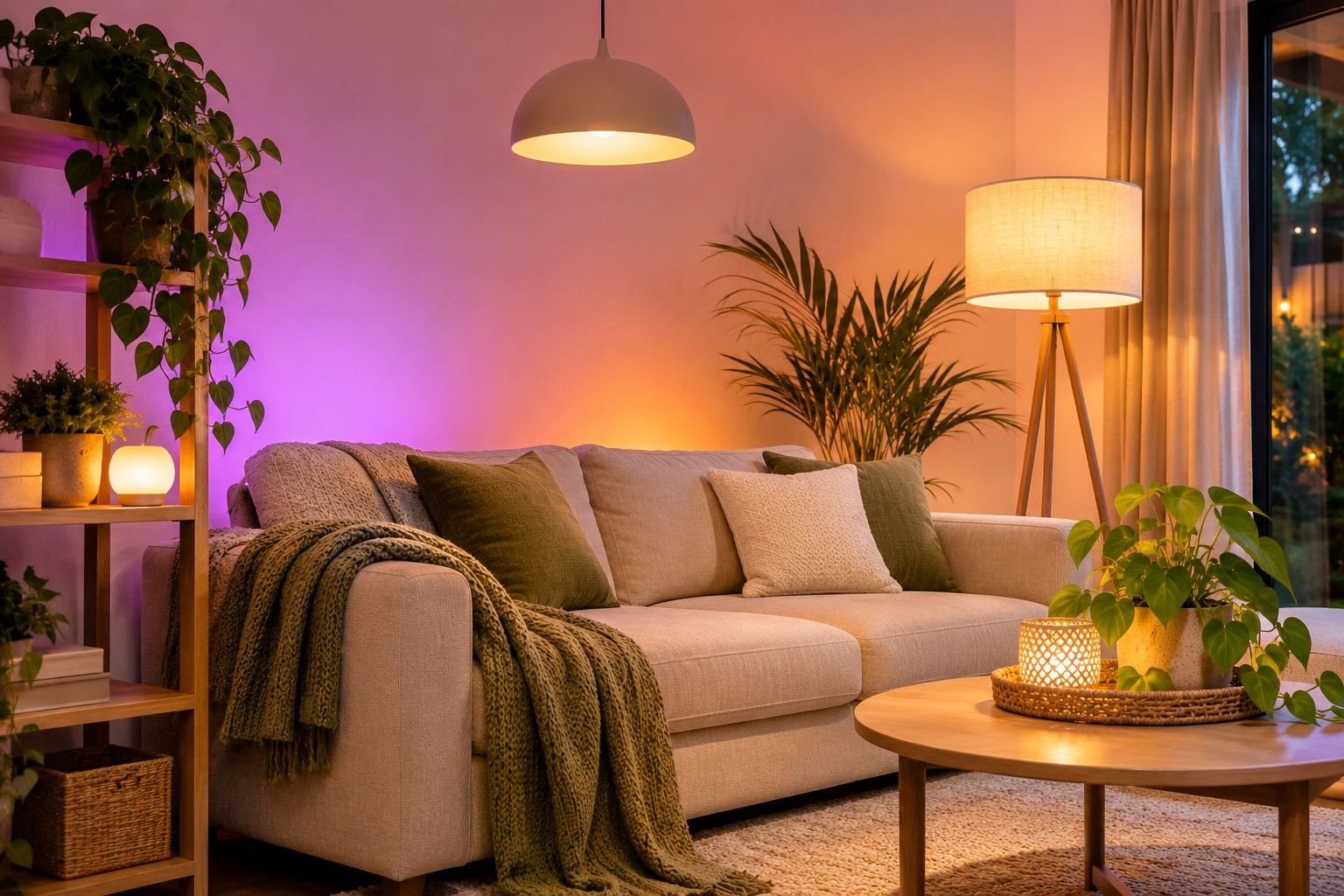
The short answer
For the best colour and the biggest system, Philips Hue White and Color Ambiance is still the best smart bulb, especially with a Hue Bridge. For great value with no hub, WiZ bulbs (made by Hue's parent company) work over Wi-Fi with Alexa and Google. On a budget, Govee colour bulbs are bright, cheap and popular. Before buying, match the bulb base to your fittings: E26 in the US, and mostly B22 bayonet or E27 screw in Australia. Leave your wall switch on so the bulb stays connected.
- Check your fitting first. US lamps use E26; Australian homes mostly use B22 bayonet or E27 screw.
- Wi-Fi bulbs need no hub; Hue works best with its Bridge for many bulbs and fast response.
- Keep wall switches on. A smart bulb turned off at the wall can't be controlled.
- Warm white (2700K) for evenings, cooler white (4000–5000K) for work and reading.
- For whole rooms, smart switches or many bulbs on a Hue Bridge are more reliable than lots of Wi-Fi bulbs.
Smart light bulbs change how a room feels at the tap of a button. Warm and dim for movies, bright and cool for working, a slow sunrise to wake you up, and lights that switch on by themselves when it gets dark. You can also control them by voice, schedule them while you’re away, and stop them being left on all night.
This guide picks the best smart bulbs at every budget, explains hubs vs Wi-Fi, and shows you how to choose the right bulb for your fittings.
All picks were checked on Amazon US and Amazon Australia. Bulb bases differ between countries, so Australian readers are shown local bayonet and screw versions.
Our picks at a glance
| Feature | Best budgetGovee Smart Colour LED Bulbs (A19) | Best valueWiZ Smart Colour Light Bulbs (2-pack) | Best premiumPhilips Hue White and Color Ambiance Smart Bulb (A19) |
|---|---|---|---|
| Best for | Cheap colour and white smart lighting with no hub | Reliable Wi-Fi bulbs from Philips' parent company, no hub needed | The best colour quality and the biggest smart lighting system |
| Price band | Budget | Mid-range | Premium |
| Colours | Millions + tunable white | Millions + tunable white | Millions + tunable white |
| Hub needed | No | No | Optional (Hue Bridge) |
| Base | E26 (US) | E26 (US) | E26 (US) |
| Where to buy | Check price | Check price | Check price |
Best premium: Philips Hue White and Color Ambiance
Hue is still the benchmark. The colours are rich, the whites range from cosy candlelight to crisp daylight, and the system is huge: lamps, light strips, outdoor lights and wireless switches all work together. It works over Bluetooth for a few bulbs, or with a Hue Bridge for fast, reliable whole-home control and automation away from home.
The trade-offs: it’s expensive, and the Bridge is needed for the full experience.
Best value: WiZ smart bulbs
WiZ is made by Signify, the company behind Philips Hue, and offers good colour and tunable white over Wi-Fi with no hub. The app includes handy routines like gentle sunrise and sunset, and the bulbs work with Alexa and Google Home.
The trade-offs: lots of Wi-Fi bulbs can crowd a busy home network, and there are fewer matching accessories than with Hue.
Best budget: Govee smart colour bulbs
Govee’s colour bulbs are bright at 800 lumens, cheap and easy to set up over Wi-Fi, with scenes and music sync in the app. More than 27,000 owners rate them 4.6 stars, making them one of Amazon’s most popular smart bulbs.
The trade-offs: the app is busier than Hue’s, and colours aren’t as refined.
Which bulb base do you need?
| Base | Where it’s common | Looks like |
|---|---|---|
| E26 | US lamps and ceiling lights | Medium screw |
| E27 | Lamps in Australia, UK and Europe | Medium screw (slightly different from E26) |
| B22 | Most Australian ceiling lights | Bayonet: push and twist, two pins |
| E14 / B15 | Small lamps, chandeliers | Small screw or small bayonet |
| GU10 | Downlights | Two chunky pins, twist in |
Take your old bulb to compare, or check the product listing before you buy.
Hub or no hub?
| Wi-Fi bulbs (WiZ, Govee) | Hue with Bridge | |
|---|---|---|
| Setup | App only | Bridge plugs into your router |
| Best for | 1–2 rooms, a few bulbs | Whole home, many bulbs |
| Response | Usually good | Very fast and reliable |
| Away-from-home control | Yes | Yes |
| Extra cost | None | Bridge |
Many newer bulbs also support Matter, which lets one bulb work with Apple Home, Google Home, Alexa and SmartThings.
Easy lighting scenes to set up
- Wake-up: a slow 20–30 minute sunrise before your alarm.
- Work: bright, cool white (4000–5000K) for focus.
- Evening: warm white (2700K) at 50–70% from sunset.
- Movie: dim warm light behind the TV, main lights off.
- Bedtime: very dim, warm, then off after 15 minutes.
- Away: lights switch on and off at random times to look lived-in.
Smart bulb tips
- Leave the wall switch on, or add a smart switch or wireless remote so guests don’t cut the power.
- Don’t use smart bulbs on dimmer switches. Dim them in the app instead.
- Group bulbs by room in the app so “turn off the living room” works by voice.
- Use warm light in the evening to make rooms feel cosy.
LED smart bulbs are energy-efficient too. The US Department of Energy notes that ENERGY STAR-rated LEDs use at least 75% less energy than incandescent bulbs and last up to 25 times longer.
Build out your smart home
Smart bulbs work well with smart plugs for lamps, and pair nicely with good floor lamps for the living room. For the front door, see our guides to video doorbells and smart locks.
Common questions
Do smart bulbs need a hub?
Wi-Fi bulbs like WiZ and Govee don't. Philips Hue works over Bluetooth for a few bulbs without a hub, but a Hue Bridge adds faster response, whole-home control, more bulbs and away-from-home control.
What happens if I turn a smart bulb off at the wall?
It loses power and can't be controlled by app or voice until you switch it back on. Leave the wall switch on, or add a smart switch or wireless remote for people who reach for the wall.
Which base do I need for smart bulbs in Australia?
Most Australian ceiling lights use B22 bayonet bases; many lamps use E27 screw, and downlights often use GU10. Check your old bulb before buying.
Are smart bulbs worth it?
For rooms where you want mood lighting, wake-up lights or schedules, yes. LED smart bulbs also use far less energy than old incandescent bulbs, and schedules stop lights being left on.
Philips Hue or WiZ?
Hue has better colour, a bigger range of lights and accessories, and the most reliable whole-home system with the Bridge. WiZ is cheaper, needs no hub and is great for a few rooms.
Do smart bulbs work with dimmer switches?
Don't put smart bulbs on a wall dimmer. Leave them on a normal switch at full power and dim them in the app, by voice or with a smart remote.
Do smart bulbs use power when off?
A little. They stay connected to listen for commands, typically using well under a watt on standby.
Sources
Keep reading
The Best Smart Plugs: The Easiest Way to Make Any Lamp or Appliance Smart
The best smart plugs for Alexa, Google and Apple Home, which ones track energy use, what you can and can't plug in, and 12 clever ways to use them.
The Best Indoor Security Cameras for Pets, Kids and Peace of Mind
The best indoor security cameras for pets, kids and home monitoring, which work without a subscription, where to put them and how to keep them secure.
The Best Smart Locks: Keyless Front Door Locks for Every Home (and Renters)
The best smart locks for front doors at every budget, keypad vs Wi-Fi vs retrofit explained, security grades, battery life and what to check before you buy.