The Best Solar Landscape Lights: Path Lights, Spotlights and String Lights That Actually Stay Bright
The best solar lights for paths, gardens and patios, how bright they need to be, why they dim in winter, and how to make them last longer.
We earn a commission if you buy through links on this page, at no extra cost to you. Learn more.
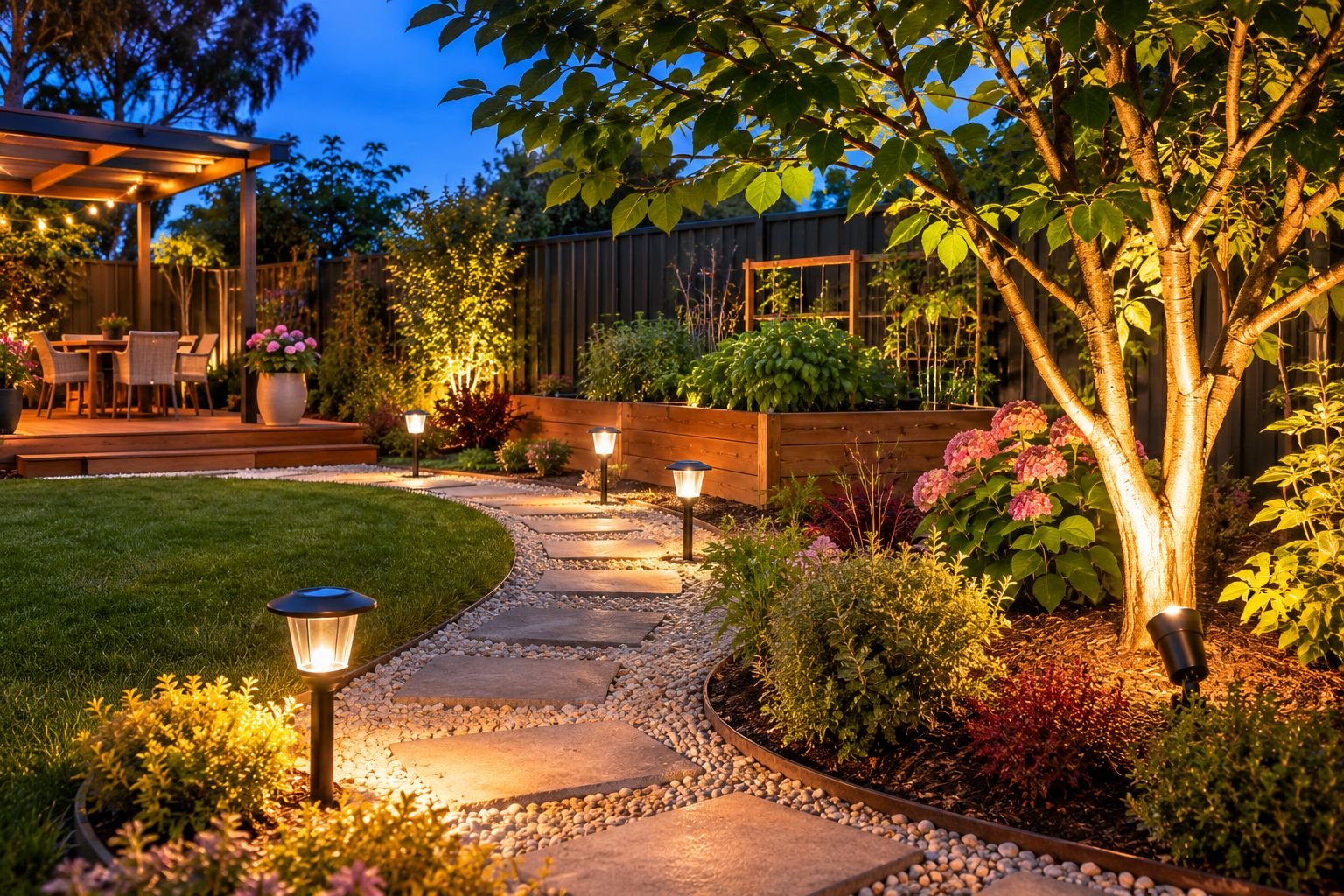
The short answer
For paths and garden edges, BITPOTT's stainless-steel solar path lights are the best value: warm white, sturdier than plastic stakes and rated IP65 for rain. To light up trees, shrubs and walls, adjustable solar spotlights like AUDERWIN's are bright and easy to aim. For decks, patios and pergolas, Brightech Ambience Pro solar string lights give a warm café glow and have more than 25,000 ratings. Put solar lights where they get 6+ hours of direct sun, choose warm white and at least IP65, and expect shorter run times in winter.
- Placement matters most. Solar lights need 6+ hours of direct sun to last through the evening.
- Warm white (around 2700–3000K) looks cosier than cool white.
- Look for IP65 or higher for real weather resistance.
- All solar lights run shorter in winter and after cloudy days. That's normal, not a fault.
- Replace rechargeable batteries every 1–3 years to bring tired lights back.
Solar lights are the easiest way to light up a garden: no electrician, no cables to bury, and no power bill. But anyone who’s bought cheap ones knows the problem: they glow dimly for an hour, then fade, and within a season half of them have stopped working.
The difference between solar lights that disappoint and solar lights that work comes down to build quality, placement and a little maintenance. This guide picks the best solar lights for paths, gardens and patios, and shows you how to get the most out of them.
All three picks are sold on Amazon US and Amazon Australia.
Our picks at a glance
| Feature | Best path lightsBITPOTT Solar Pathway Lights (8-pack, warm white) | Best spotlightsAUDERWIN Solar Spotlights (4-pack) | Best string lightsBrightech Ambience Pro Solar String Lights |
|---|---|---|---|
| Best for | Lighting paths, driveways and garden bed edges | Uplighting trees, shrubs, walls and garden features | Decks, patios and pergolas — café-style lighting with no wiring |
| Price band | Budget | Budget | Mid-range |
| Type | Path stake lights | Spotlight | Solar string lights |
| Light | Warm white | Cool white | Warm white |
| Weather rating | IP65 | IP65 | — |
| Bulbs | — | — | Shatterproof |
| Where to buy | Check price | Check price | Check price |
Best path lights: BITPOTT stainless-steel solar path lights
Path lights mark the edges of paths, driveways and garden beds so you can see where you’re walking. These BITPOTT lights are stainless steel and glass rather than flimsy plastic. They give a warm white glow that looks inviting rather than clinical, and they’re rated IP65 for rain and sprinklers. Rated 4.4 stars by thousands of owners in the US and Australia.
The trade-offs: like all solar lights, they run shorter after cloudy days and in winter, and the batteries need replacing every few years.
Best spotlights: AUDERWIN solar spotlights
Spotlights make a garden look professionally lit. Aim them up a tree trunk, across a textured wall or onto a garden feature. These have an adjustable head and solar panel, so you can angle the panel towards the sun and the light towards your feature. They’re bright for solar and weatherproof.
The trade-offs: this version is cool white. Look for a warm white option if you want a softer look. They also need a sunny position to charge.
Best string lights: Brightech Ambience Pro solar
For a deck, patio or pergola, café-style string lights create instant atmosphere. The Brightech Ambience Pro has shatterproof bulbs and a separate solar panel, so the lights can hang under a covered area while the panel sits in full sun. With more than 25,000 ratings at 4.5 stars, it’s among the most popular outdoor string lights on Amazon.
The trade-offs: run time drops in winter, and the panel needs a clear, sunny spot.
Which solar lights do you need?
| Where | Type | Tip |
|---|---|---|
| Paths, driveways, bed edges | Path stake lights | Space them 1.5–2 m (5–6 ft) apart, staggered on both sides |
| Trees, shrubs, walls | Spotlights | Aim upwards from 30–60 cm away |
| Decks, patios, pergolas | String lights | Use a separate panel in full sun |
| Steps and stairs | Step or deck lights | Light every step for safety |
| Fences and walls | Wall or fence lights | Mount where the panel sees the sun |
| Security and driveways | Motion floodlights | Choose 500+ lumens with a motion sensor |
How to choose solar lights
- Weather rating: IP65 or higher.
- Light colour: warm white (2700–3000K) for gardens and patios, cool white for security.
- Brightness: 5–30 lumens per path light, 100+ for spotlights and security.
- Materials: stainless steel, aluminium and glass outlast thin plastic.
- Panel: a larger panel, or a separate one you can place in the sun, charges better.
- Replaceable battery: lets you revive tired lights cheaply.
How to make solar lights brighter and last longer
- Give them sun. Aim for 6+ hours of direct sun. Shade from trees, fences and the house is the number one cause of dim lights.
- Charge them fully before first use. Leave them switched off in full sun for a day or two.
- Clean the panels monthly with a damp cloth. Dust and pollen block charging.
- Keep them away from other lights. Porch and street lights can stop the sensor switching them on.
- Replace the batteries every 1–3 years with the same type and capacity.
- Store them in winter, if you rarely use the garden then, to extend battery life.
Making the most of your outdoor space? See our guides to the best patio furniture covers and the best garden hose.
Common questions
How long do solar lights last?
The fittings can last many years, but the rechargeable batteries usually need replacing every 1–3 years, and the LEDs gradually dim over several years. Each night, most solar lights run around 6–10 hours after a full sunny day, and less after cloudy days or in winter.
Do solar lights work in winter or on cloudy days?
Yes, but less well. Shorter days and weaker sun mean less charge, so lights run fewer hours and may be dimmer. Clean the panels, move lights to the sunniest spots, and choose models with a separate panel you can place in full sun.
How bright should solar path lights be?
For marking a path, 5–30 lumens per light is plenty and looks natural. For security or lighting a large area, look for spotlights or floodlights with 100+ lumens. Too bright can look harsh in a garden.
Why have my solar lights stopped working?
The most common causes are a worn-out rechargeable battery, a dirty panel, too much shade, or the light being switched off. Clean the panel, check the switch, leave it in full sun for a couple of days, and if it's still dim, replace the battery with the same type and capacity.
What does IP65 mean on solar lights?
IP65 means the light is dust-tight and protected against water jets from any direction, so it handles rain and sprinklers. IP67 can survive brief immersion. For outdoor lights, IP65 or higher is a good minimum.
Should I choose warm white or cool white solar lights?
Warm white (about 2700–3000K) looks softer and more welcoming in gardens and on patios. Cool white is brighter-looking and suits security lighting or modern spaces. Many people use warm white for paths and string lights, and cool white for spotlights on walls or trees.
Do solar lights need to be turned off during the day?
No. Most switch on automatically at dusk and off at dawn using a light sensor. Make sure the switch is on, and avoid placing them near porch lights or street lights, which can stop them switching on.
Sources
Keep reading
The Best Compost Bins: Tumblers, Backyard Bins and Kitchen Caddies
The best compost bins for every yard, tumbler vs open bin explained, what you can and can't compost, and how to keep compost fast, sweet-smelling and rat-free.
The Best Garden Hose: Kink-Free, Lightweight and Built-to-Last Picks
The best garden hoses, from a light hybrid to rubber that lasts for years, plus how to choose size, length and material and stop kinks and leaks.
The Best Pruning Shears (Secateurs) for Roses, Shrubs and Everyday Gardening
The best pruning shears for every budget, bypass vs anvil vs ratchet explained, the right pair for your hands, and how to clean and sharpen them.