The Best Garden Hose: Kink-Free, Lightweight and Built-to-Last Picks
The best garden hoses, from a light hybrid to rubber that lasts for years, plus how to choose size, length and material and stop kinks and leaks.
We earn a commission if you buy through links on this page, at no extra cost to you. Learn more.
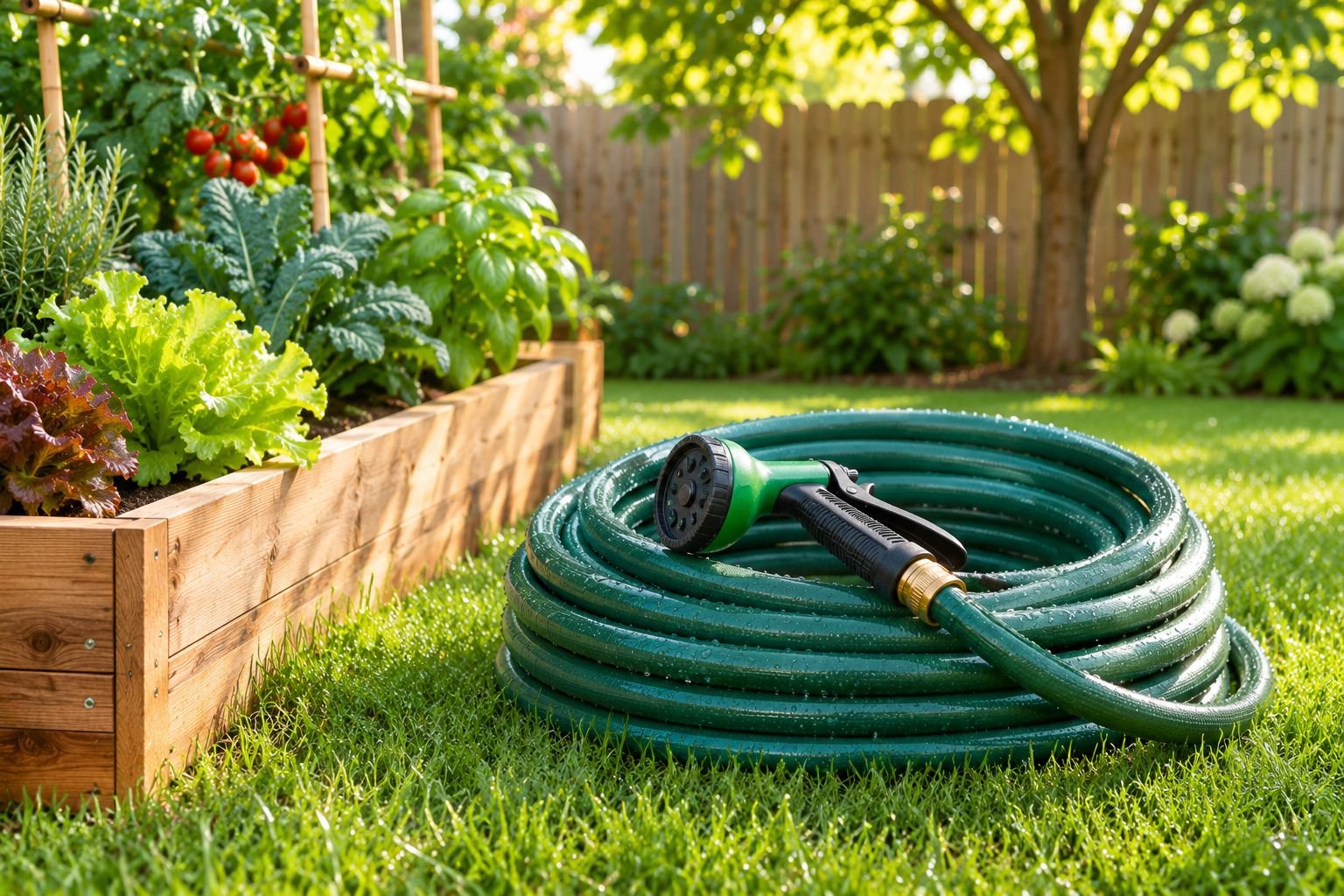
The short answer
For most yards, the Flexzilla 5/8-inch x 50 ft hybrid hose is the best garden hose: it's light, lies flat, stays flexible in the cold and has over 100,000 Amazon ratings. On a budget, the Giraffe Tools hybrid hose with a swivel grip is a good alternative. For heavy daily use and hot sun, buy a rubber hose like the Dramm ColorStorm, which is heavier but lasts longest. If anyone drinks from the hose, use a drinking-water hose such as the Camco TastePURE. Choose 5/8 inch for most homes and buy only the length you need.
- 5/8 inch is the right diameter for most homes; 3/4 inch only helps with long runs or big watering jobs.
- Hybrid hoses are the best balance of weight and toughness. Rubber lasts longest; cheap vinyl kinks and cracks.
- Buy the shortest length that reaches. Every extra metre adds weight and reduces water pressure at the nozzle.
- Expandable hoses are light and handy for balconies, but they rarely last long.
- In Australia, US-made hoses need a thread adapter or click-on fittings to fit standard taps.
Most people buy a cheap hose, fight it for a summer and then buy another one. Vinyl hoses kink every time you turn a corner, crack in the sun and leak at the tap.
A good hose doesn’t cost much more, and it’ll last for years if you choose the right material, size and length. This guide covers all three. It also explains what “drinking-water safe” means, why expandable hoses usually let people down, and a fitting problem most guides skip: US hoses don’t screw straight onto Australian taps.
All four picks below are sold on both Amazon US and Amazon Australia.
Our picks at a glance
| Feature | Best overallFlexzilla Flexzilla Garden Hose 5/8 in. x 50 ft | Budget pickGiraffe Tools Hybrid Garden Hose 5/8 in. x 50 ft (SwivelGrip) | Premium pickDramm ColorStorm Premium Rubber Garden Hose 5/8 in. x 50 ft |
|---|---|---|---|
| Best for | Most yards — a light, flexible hose that lies flat and doesn't fight you | A good everyday hose without paying for a big-name brand | Heavy daily use, hot sun and anyone who wants to buy once |
| Price band | Mid-range | Budget | Premium |
| Material | Hybrid polymer | Hybrid | Rubber |
| Diameter | 5/8 in (about 16 mm) | 5/8 in (about 16 mm) | 5/8 in (about 16 mm) |
| Length | 50 ft (about 15 m) | 50 ft (about 15 m) | 50 ft (about 15 m) |
| Fittings | Aluminium | Swivel grip at the tap end | Nickel-plated |
| Where to buy | Check price | Check price | Check price |
Best overall: Flexzilla hybrid hose
Flexzilla is the hose most gardeners end up recommending. It’s made from a hybrid polymer that stays flexible even on cold mornings. It lies flat when you unroll it instead of springing back into loops, and it’s much lighter than rubber, so dragging 15 m of it across the lawn is easy. The fittings are aluminium, which won’t crack like plastic fittings or crush like thin brass when you step on them.
With more than 100,000 ratings averaging 4.3–4.4 stars across Amazon US and Australia, it’s one of the most-reviewed hoses you can buy.
The trade-offs: it can still kink if you yank it hard around a tight corner, and the bright lime-green colour isn’t to everyone’s taste.
Best budget pick: Giraffe Tools hybrid hose
The Giraffe Tools hose gives you most of what makes a hybrid hose good for less money. The standout feature is the swivel grip at the tap end. The hose turns at the connection instead of twisting along its length as you walk, which is one of the main causes of kinks.
It’s rated 4.3 stars by thousands of owners in both the US and Australia.
The trade-offs: it’s a younger brand without Flexzilla’s long track record, and it’s a little heavier.
Best premium pick: Dramm ColorStorm rubber hose
If you water every day, the hose lives in full sun, or you’re tired of replacing hoses, buy rubber. Rubber handles heat and UV far better than vinyl, resists kinks, and survives being stepped on and driven over. The Dramm ColorStorm adds crush-resistant, nickel-plated couplings and bright colours, so you won’t lose it in the grass or trip over it.
The trade-offs: rubber is heavy. A 15 m rubber hose takes more effort to drag and coil than a hybrid. It’s also the most expensive pick.
Best for drinking water: Camco TastePURE
Ordinary garden hoses aren’t made for drinking water. The PVC and brass fittings can release lead and other chemicals into water that sits in the hose, especially on hot days. If your kids drink from the hose, you fill the dog’s bowl with it, or you fill a caravan or RV tank, use a hose made for drinking water.
The Camco TastePURE is sold for exactly that job and is rated 4.6 stars by more than 19,000 US owners. Keep it for drinking water and use a normal garden hose for everything else.
How to choose a garden hose
1. Material: hybrid for most people, rubber to buy once
| Material | Weight | Kinking | Lifespan | Best for |
|---|---|---|---|---|
| Vinyl (PVC) | Light | Kinks easily | Short; cracks in sun | Occasional, light use only |
| Hybrid (rubber/PVC or polymer) | Light to medium | Resists kinks | Several years | Most home gardens |
| Rubber | Heavy | Rarely kinks | Longest | Daily use, hot climates, heavy work |
| Expandable | Very light | Doesn’t kink, but punctures | Often 1–2 years | Balconies and small patios |
| Polyurethane | Very light | Resists kinks | Long, but pricey | People who want light and tough |
2. Diameter: 5/8 inch suits most homes
Hose diameter is measured on the inside, and it decides how much water reaches the nozzle.
- 1/2 inch (12 mm): light and cheap, but low flow. Fine for pots and short runs.
- 5/8 inch (about 16 mm): the standard for home gardens. Enough flow for sprinklers, car washing and watering, without much weight.
- 3/4 inch (18–19 mm): the most water and the least pressure loss. Worth it for very long runs, big lawns and large sprinklers, but heavy.
3. Length: buy the shortest one that reaches
Measure from the tap to the furthest corner you water, then add 2–3 m (5–10 ft) for going around beds. The longer the hose, the heavier it is and the lower the pressure at the nozzle.
| Yard | Typical length |
|---|---|
| Balcony, courtyard or patio | 7.5–10 m (25–35 ft) |
| Small to average suburban yard | 15 m (50 ft) |
| Large yard | 20–30 m (65–100 ft) |
| Very large block | Two hoses joined, or a second tap |
4. Fittings: the part that usually fails
Cheap plastic fittings crack and thin brass ones crush when stepped on. Look for heavy brass, aluminium or nickel-plated couplings and a rubber washer inside. A swivel fitting at the tap end helps stop twisting and kinks.
5. Burst pressure
Household water pressure is usually well under 100 psi. A hose rated for a burst pressure of several hundred psi has plenty of safety margin and is less likely to balloon or split when a nozzle is closed.
Australian buyers: check the tap fittings
US hoses use garden hose thread (GHT) fittings. Australian taps use BSP thread, and most Australian gardens use click-on connectors (Hozelock or Holman style). The two threads look similar but aren’t the same, so a US hose won’t seal properly on an Australian tap.
You have two easy options:
- Fit a GHT-to-BSP adapter on the tap (cheap, and sold at hardware stores and on Amazon).
- Cut off the US fittings and fit standard Australian click-on hose connectors to a 5/8-inch (or 18 mm) hose.
Check the listing photos for the fitting type before you order.
How to make your hose last
- Drain it after use. Water left inside heats up in the sun and breaks the hose down faster.
- Store it out of direct sun. A reel or wall hanger in the shade adds years to any hose.
- Turn the water off at the tap, not only at the nozzle, so the hose isn’t under pressure all day.
- Don’t drag it by the nozzle around sharp corners. That’s how hoses kink and fittings split.
- Bring it in or drain it before frost. Water that freezes inside can split the hose.
- Replace the rubber washer when the tap end starts to drip. It costs cents and fixes most leaks.
Common hose problems (and fixes)
- Leaks at the tap: replace the washer, or wrap the tap thread with plumber’s tape. In Australia, check that the thread matches (see above).
- Constant kinking: it’s probably vinyl, or it was coiled while twisted. Unroll it fully in the sun and recoil it in loose loops.
- Low pressure: the hose is too long or too narrow, or there’s a kink or blocked nozzle somewhere along it.
- Expandable hose won’t shrink: it’s often a split inner tube, which usually can’t be fixed.
- A split in the middle: a hose mender can patch it, but if the hose is old and stiff, replace it.
Planting a new bed this season? See our guide to how much soil a raised garden bed needs and the best wood for raised garden beds.
Common questions
What is the best type of garden hose?
For most people, a hybrid hose (a blend of rubber and PVC or polymer) is best. It's lighter and more flexible than rubber but tougher and less kink-prone than cheap vinyl. Rubber is the best choice if you water every day, the hose sits in hot sun, or you want it to last as long as possible.
What is a hybrid garden hose?
A hybrid hose is made from a blend of rubber and PVC (or a similar polymer). It aims to combine the flexibility and toughness of rubber with the light weight and lower price of vinyl. Flexzilla and Giraffe Tools both make popular hybrid hoses.
Is a 5/8 or 3/4 inch hose better?
For a normal home garden, 5/8 inch is better. It carries plenty of water for watering, washing the car and running a sprinkler, and it's lighter to drag around. A 3/4 inch hose moves more water, which helps with very long runs (over about 30 m / 100 ft), large lawns and big sprinklers, but it's heavier and costs more.
What length of garden hose do I need?
Measure the furthest point you need to water from the tap, then add a few metres for going around corners and garden beds. Most suburban yards need 15 m (50 ft). Longer hoses are heavier, harder to coil and give lower pressure at the nozzle, so don't buy extra length just in case.
How long do garden hoses last?
It depends mainly on the material and how you store it. Cheap vinyl hoses often crack within a few seasons. Good hybrid hoses last several years. Rubber hoses kept out of the sun and drained before winter can last ten years or more.
Are expandable hoses any good?
They're light, shrink small and are handy for balconies, patios and small gardens. But the thin inner tube is easy to puncture and many burst within a year or two. If you water a lot, a regular hybrid hose on a reel is better value over time.
Is it safe to drink water from a garden hose?
Not from most garden hoses. Ordinary hoses and brass fittings can release lead and other chemicals, especially when water sits in a hot hose. Use a hose labelled as drinking-water safe for pets, paddling pools and caravans, and run the water for a few seconds before drinking.
Can you use an expandable hose with a hose reel?
Usually not well. Expandable hoses are designed to shrink after use and bunch up rather than wind evenly. Store them loosely in a bucket or on a simple hanger instead.
How do I stop my garden hose from kinking?
Unroll it fully before turning the water on, uncoil it the same way you coiled it, and avoid pulling it around tight corners. Hoses kink less when they're warm, so leave a stiff hose in the sun for a few minutes. A hose with a swivel fitting at the tap also stops twisting.
Sources
Keep reading
The Best Compost Bins: Tumblers, Backyard Bins and Kitchen Caddies
The best compost bins for every yard, tumbler vs open bin explained, what you can and can't compost, and how to keep compost fast, sweet-smelling and rat-free.
The Best Pruning Shears (Secateurs) for Roses, Shrubs and Everyday Gardening
The best pruning shears for every budget, bypass vs anvil vs ratchet explained, the right pair for your hands, and how to clean and sharpen them.
The Best Solar Landscape Lights: Path Lights, Spotlights and String Lights That Actually Stay Bright
The best solar lights for paths, gardens and patios, how bright they need to be, why they dim in winter, and how to make them last longer.