The Best Bird Feeders (and How to Feed Birds Safely)
The best bird feeders for gardens, balconies and windows, how to keep squirrels and pests off, how often to clean feeders, and safe feeding rules for Australia.
We earn a commission if you buy through links on this page, at no extra cost to you. Learn more.
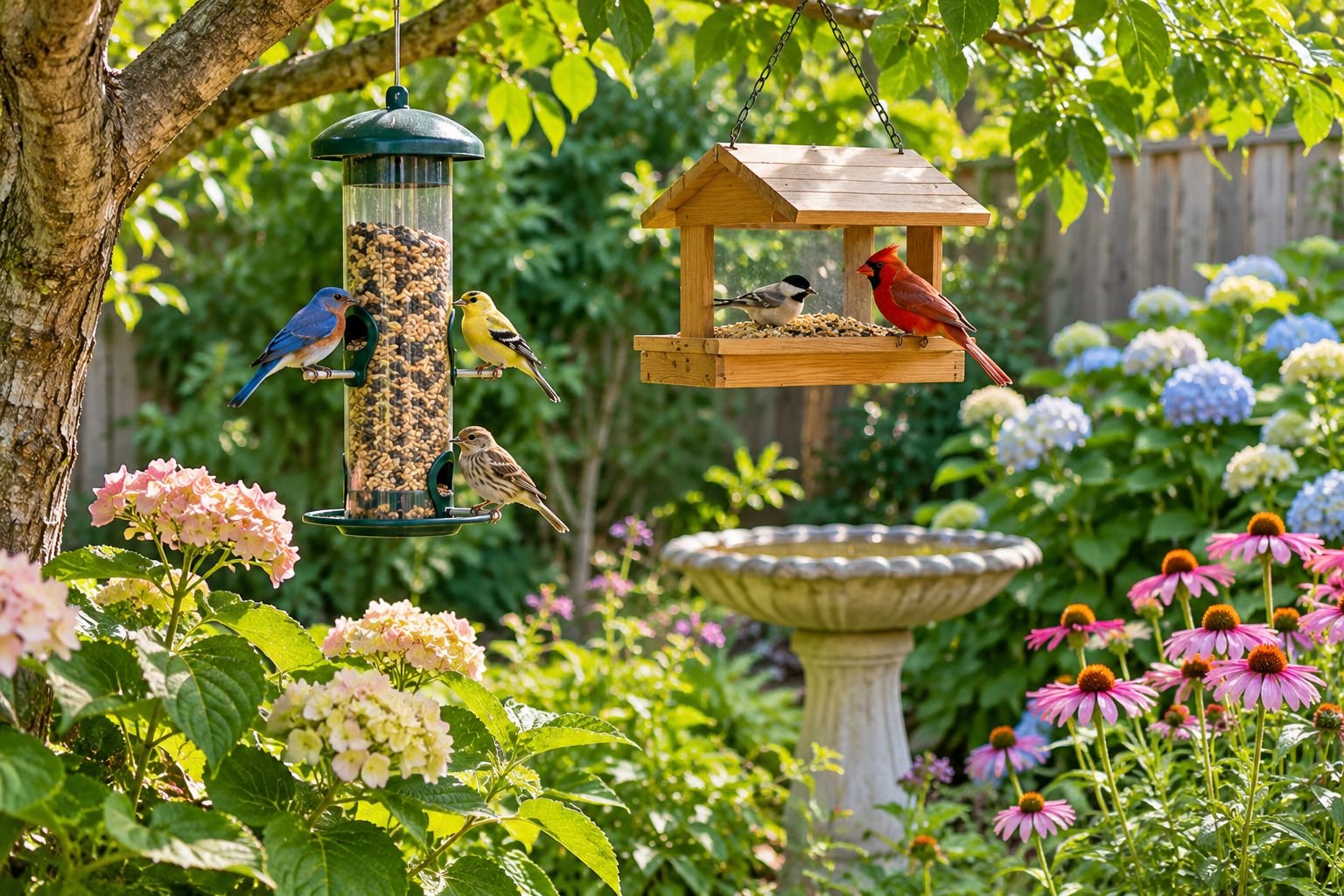
The short answer
For most gardens, a metal tube feeder like the iBorn 6-port is the best place to start: it's cheap, chew-resistant and easy to fill and clean. If squirrels, possums or big birds raid your feeder, the weight-activated Squirrel Buster Plus closes its ports when a heavy animal lands. For apartments or close-up viewing, a window feeder like Nature's Hangout sticks to the glass. Clean seed feeders about every two weeks. In Australia, where official advice discourages regular feeding, feed sparingly, never offer bread, and focus on a clean birdbath and native plants.
- Match the feeder to the birds you want and the pests you have.
- Clean seed feeders about every two weeks, more often in warm, wet weather.
- Hang feeders where cats can't ambush birds, and away from windows or very close to them.
- Never feed bread; offer foods suited to the birds that visit.
- In Australia, feed only as an occasional treat. Water and native plants help birds most.
There’s something special about watching birds in your garden from the kitchen window. A good bird feeder brings them close, keeps the seed dry, keeps pests out, and is easy to clean. A bad one goes mouldy, spills seed everywhere and becomes a buffet for squirrels, possums and rats.
This guide picks the best bird feeders for gardens, balconies and windows, shows you where to hang them, and explains how to keep birds healthy, including the different advice in Australia.
All picks were checked on Amazon US and Amazon Australia.
Before you buy: feeding birds in Australia
Advice differs between countries. In the US and UK, backyard feeding is widely encouraged. In Australia, it’s more controversial. BirdLife Australia says that as a bird conservation charity, it does not encourage wild bird feeding, and notes that in Western Australia it’s illegal to feed native fauna, including birds, without a licence.
BirdLife adds that most Australian birds need a varied diet of insects and nectar, seed or fruit, and that most people aren’t feeding birds their natural diet. If you feed birds in Australia:
- Feed small amounts, not every day, so birds don’t rely on you.
- Never feed bread, honey, mince or processed food.
- Keep feeders and birdbaths very clean.
- Plant native shrubs and add a birdbath. Water and natural food help birds most.
Our picks at a glance
| Feature | Best budgetiBorn Metal Tube Bird Feeder (6 ports) | Best pest-proofBrome Squirrel Buster Plus | Best window feederNature's Hangout Window Bird Feeder |
|---|---|---|---|
| Best for | A cheap, chew-resistant first feeder for small seed-eating birds | Gardens with squirrels, possums or big birds raiding the feeder | Watching birds up close from inside, apartments and small gardens |
| Price band | Budget | Premium | Budget |
| Type | Tube feeder | Weight-activated tube | Window feeder |
| Ports | 6 | 6 | Open tray |
| Pest-resistant | Partly (metal parts) | Yes | Mostly (window height) |
| Where to buy | Check price | Check price | Check price |
Best budget: iBorn metal tube feeder
A tube feeder is the classic choice for small seed-eating birds. The iBorn has six feeding ports with metal perches, a metal lid and base that resist chewing, and a clear tube so you can see when it needs refilling. It’s rated 4.5 stars by thousands of owners in both stores.
The trade-offs: it isn’t fully squirrel- or possum-proof, and seed can clump in wet weather, so clean it often.
Best pest-proof: Squirrel Buster Plus
If squirrels, possums, cockatoos or other big visitors empty your feeder, the Squirrel Buster is the answer. It’s weight-activated: when a heavy animal lands, a shroud drops and closes the ports, so only small birds can feed. It comes apart easily for cleaning and has more than 10,000 ratings at 4.7 stars.
The trade-offs: it’s expensive, and it’s an expensive import in Australia, so our Australian link shows similar weight-activated feeders.
Best window feeder: Nature’s Hangout
No garden? A window feeder sticks to the outside of a window with strong suction cups, so you can watch birds up close from your sofa or kitchen table. It has a removable tray for easy cleaning and more than 20,000 ratings in each store.
The trade-offs: it needs frequent cleaning, and the suction cups need a clean, smooth window.
Which feeder suits which birds?
| Feeder type | Attracts | Pros | Cons |
|---|---|---|---|
| Tube feeder | Small seed-eaters (finches, sparrows, chickadees) | Keeps seed dry, less waste | Small birds only |
| Platform or tray | Wide range, including doves and ground feeders | Easy to see birds | Seed gets wet, attracts pests |
| Weight-activated | Small birds only | Stops squirrels and possums | Expensive |
| Window feeder | Small birds | Close-up viewing | Needs frequent cleaning |
| Nectar feeder | Hummingbirds (US) | Fun to watch | Not recommended in Australia |
| Birdbath | Almost every bird | Helps birds in hot weather | Needs fresh water daily |
Where to hang a bird feeder
- Near cover, not too near. Put it a few metres from shrubs so birds can escape predators, but not where cats can hide and pounce.
- Safe from windows. Either very close to a window (under 1 m) or well away (over 9 m), to reduce window strikes.
- Away from jumping-off points. Keep it at least 2–3 m from branches, fences and roofs if squirrels or possums visit.
- About 1.5–2 m high, at a height you can easily reach to clean and refill.
- Visible from inside, so you can enjoy it.
How to clean a bird feeder
Dirty feeders spread disease between birds. The Cornell Lab of Ornithology advises cleaning feeders about once every two weeks, and more often in heavy use, wet weather, or if you’ve seen sick birds. It suggests a hot dishwasher cycle, or hand washing with soap and boiling water or a dilute bleach solution of no more than 1 part bleach to 9 parts water.
- Empty and take the feeder apart.
- Scrub every part with a bottle brush and hot soapy water.
- Soak in a dilute bleach solution (1:9) for about 10 minutes, if you’re disinfecting.
- Rinse thoroughly and let everything dry completely before refilling.
- Rake up spilled seed under the feeder.
- Refresh birdbath water daily and scrub it weekly.
Bird feeding tips
- Add a birdbath. In hot weather, water can matter even more than food.
- Plant native flowering shrubs for natural food and shelter.
- Keep cats indoors or away from feeders.
- Don’t overfill. Fresh small amounts reduce mould and pests.
- Stop feeding if large flocks gather or sick birds appear, and clean everything.
More for your garden: the best raised garden beds, the best solar landscape lights and the best pruning shears.
Common questions
What is the best type of bird feeder?
A tube feeder with metal ports suits most small seed-eating birds. Platform feeders attract a wider variety, including ground feeders. Weight-activated feeders stop squirrels and possums, and window feeders give close-up views.
How often should I clean a bird feeder?
About every two weeks, and more often in warm, wet weather, during heavy use, or if you see sick birds. Take it apart, scrub it, soak it in a dilute bleach solution (no more than 1 part bleach to 9 parts water), rinse well and dry fully.
Where should I hang a bird feeder?
In a quiet spot about 1.5–2 m off the ground, near shrubs birds can dart into, but not where cats can hide and pounce. Place feeders either very close to windows (under 1 m) or well away (over 9 m) to reduce window strikes.
How do I keep squirrels and possums off my bird feeder?
Use a weight-activated feeder, add a baffle above or below it, and hang it away from branches, fences and roofs that animals can jump from.
Is it okay to feed wild birds in Australia?
It's controversial. BirdLife Australia doesn't encourage it, and feeding native fauna without a licence is illegal in Western Australia. If you do, feed small amounts occasionally, choose foods suited to the species, never feed bread, honey or mince, and keep everything clean.
What should I not feed birds?
Avoid bread, processed human food, salty or mouldy food, honey and sugar water (in Australia), and mince. They can cause malnutrition and disease.
Do bird feeders attract rats?
Spilled seed can. Use a feeder with a seed tray, don't overfill it, clean up spilled seed, and bring feeders in at night if rats are a problem.
Sources
Keep reading
The Best Pruning Shears (Secateurs) for Roses, Shrubs and Everyday Gardening
The best pruning shears for every budget, bypass vs anvil vs ratchet explained, the right pair for your hands, and how to clean and sharpen them.
The Best Hose Nozzles: Spray Guns and Watering Wands That Save Water
The best hose nozzles and watering wands, which spray pattern to use for each job, why trigger nozzles save water, and the right fittings for Australia.
The Best Raised Garden Beds: Metal, Modular and Waist-High Picks
The best raised garden beds for vegetables, galvanised vs wood vs elevated beds, the right depth for every crop, and how to set one up and fill it.