The Best Raised Garden Beds: Metal, Modular and Waist-High Picks
The best raised garden beds for vegetables, galvanised vs wood vs elevated beds, the right depth for every crop, and how to set one up and fill it.
We earn a commission if you buy through links on this page, at no extra cost to you. Learn more.
The short answer
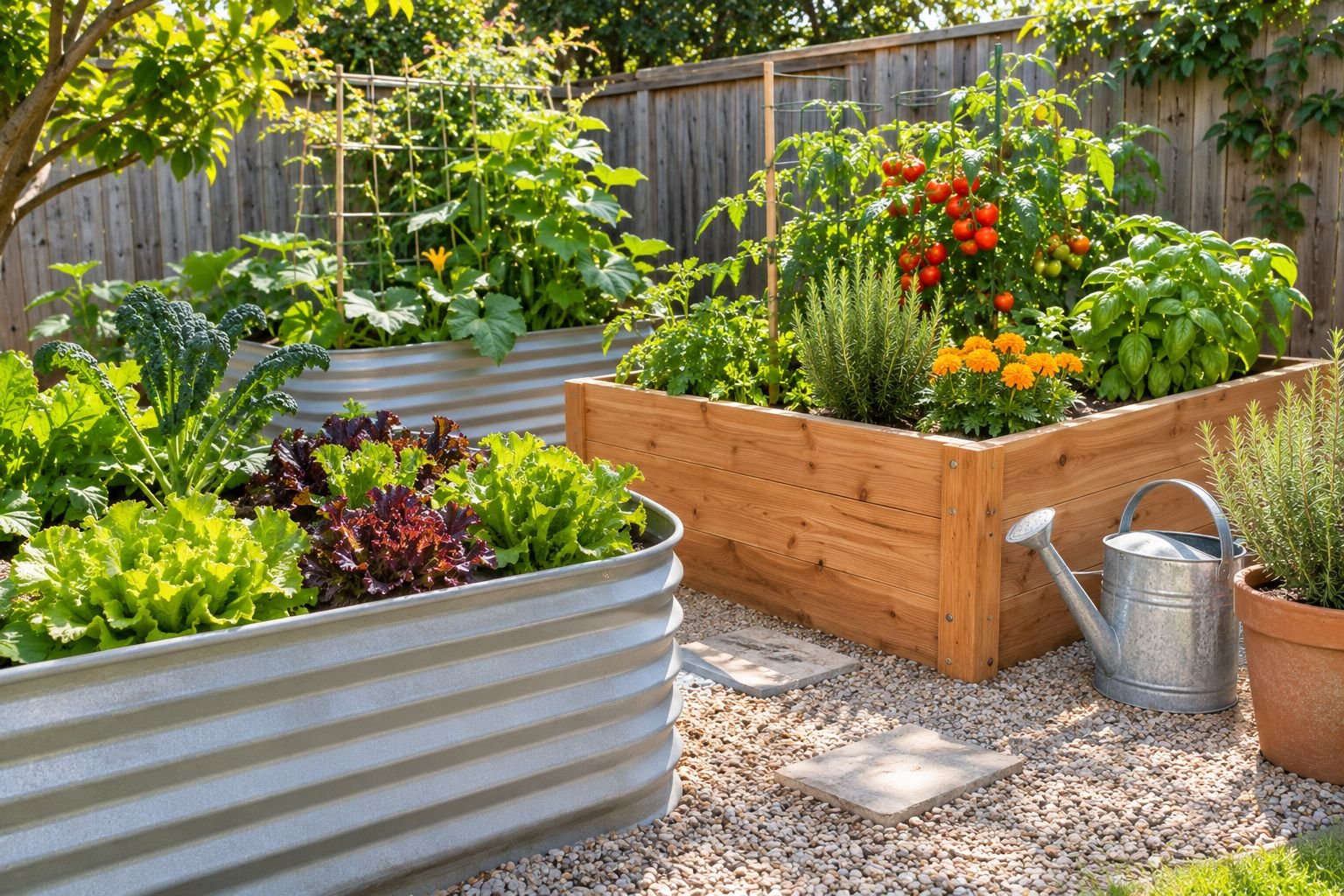
For most vegetable gardens, a deep, coated metal bed like the Vego 9-in-1 modular bed is the best raised garden bed: 43 cm (17 in) of soil suits most crops and the coated steel lasts for years. On a budget, the Land Guard oval galvanised bed is cheap, rust-resistant and sold in both stores. If you don't want to bend down, or you garden on a patio or balcony, choose an elevated bed on legs like Best Choice Products' planter. Fill any bed with a raised-bed or garden mix with plenty of compost.
- Metal beds last longest; wood looks natural; elevated beds save your back.
- Aim for at least 30 cm (12 in) of soil, and 40–60 cm for root crops and tomatoes.
- Galvanised steel is long-lasting and widely used for food gardens.
- Keep beds about 1–1.2 m wide so you can reach the middle from both sides.
- Fill with a raised-bed mix or topsoil blended with plenty of compost.
Raised garden beds make growing vegetables easier. The soil warms up faster in spring, drains better, has fewer weeds, and you don’t have to bend as far. They also let you grow great food on poor soil, clay or even a patio.
This guide picks the best raised garden beds for different gardens, compares metal, wood and elevated beds, and shows you how to set one up and fill it.
All picks were checked on Amazon US and Amazon Australia.
Our picks at a glance
| Feature | Best budgetLand Guard Galvanized Raised Garden Bed (oval) | Best overallVego garden 9-in-1 Modular Metal Raised Garden Bed (17" tall) | Best waist-highBest Choice Products Elevated Wood Raised Garden Bed (48x24x30 in) |
|---|---|---|---|
| Best for | A cheap, long-lasting first raised bed for vegetables | Serious veggie growers who want a deep, sturdy bed that lasts | Balconies, patios and gardeners who don't want to bend down |
| Price band | Budget | Premium | Mid-range |
| Material | Galvanised steel | Coated steel | Fir wood |
| Depth | 12 in (30 cm) to taller options | 17 in (43 cm) | Shallow (planter box) |
| Bottom | Open | Open | Lined with drainage |
| Where to buy | Check price | Check price | Check price |
Best overall: Vego 9-in-1 modular metal bed
If you’re serious about growing vegetables, the Vego is worth the money. It has 43 cm (17 in) of soil depth, which suits almost every vegetable, thick coated steel that resists rust for years, and rounded safety edges. The kit can be built in nine different shapes and sizes, so it fits awkward spaces. It’s rated 4.8 stars.
The trade-offs: it’s expensive, and it’s an expensive import in Australia, so our Australian link shows similar modular metal beds sold locally.
Best budget: Land Guard galvanised oval bed
The Land Guard is the easiest, cheapest way to start. It’s galvanised steel with rounded oval ends, so there are no sharp corners, and it comes in several sizes and heights. It’s rated 4.5 stars by more than 13,000 owners in the US and 11,000+ in Australia.
The trade-offs: the thin panels flex a little when you fill it, and the shallow sizes limit carrots and potatoes. Choose a taller size for root crops.
Best waist-high: Best Choice Products elevated bed
An elevated bed on legs brings the garden to waist height, so there’s no bending or kneeling. It’s ideal for patios, balconies, courtyards and anyone with a sore back or knees. It comes with a liner and drainage holes.
The trade-offs: the soil is shallow, so it’s best for herbs, lettuce, strawberries and other shallow-rooted crops, and the wood needs care to last.
Metal vs wood vs elevated beds
| Type | Lifespan | Looks | Cost | Best for |
|---|---|---|---|---|
| Galvanised or coated steel | Very long | Modern | Budget to premium | Most vegetable gardens |
| Cedar or untreated hardwood | Medium, eventually rots | Natural | Mid | Traditional gardens |
| Elevated planter on legs | Medium | Tidy | Mid | Patios, balconies, bad backs |
| Fabric grow bed | Short | Basic | Budget | Renters, trial gardens |
The University of Minnesota Extension notes that raised beds can be made from wood, metal, bricks, cinder blocks, plastic or fabric, and that the soil in raised beds warms up earlier in spring. Its gardening guide adds that galvanised steel can resist rust for upwards of 50 years, and typically comes in 24-inch panels that give raised beds a good depth.
For a deeper dive on timber, see our guide to the best wood for raised garden beds.
How deep should your raised bed be?
| Crops | Minimum soil depth |
|---|---|
| Lettuce, salad greens, herbs, strawberries | 20–30 cm (8–12 in) |
| Beans, peas, capsicum, kale, onions | 30–40 cm (12–16 in) |
| Tomatoes, zucchini, cucumbers | 40–50 cm (16–20 in) |
| Carrots, potatoes, parsnips | 45–60 cm (18–24 in) |
Open-bottomed beds sitting on soil let roots grow deeper than the bed itself.
How to set up a raised garden bed
- Pick a sunny spot. Most vegetables need 6–8 hours of sun a day.
- Level the ground so water spreads evenly.
- Keep it reachable. About 1–1.2 m wide if you can reach from both sides, or 60–75 cm against a fence.
- Smother weeds and grass with a layer of plain cardboard on the bottom.
- Fill with a raised-bed mix, or about 60% topsoil and 40% compost. Use our soil calculator guide to work out how much you need.
- Water it in and let it settle for a few days, then top up.
- Mulch around plants to keep moisture in.
Raised bed tips
- Top up with compost each season as the soil settles. Our guide to the best compost bins helps.
- Water deeply a couple of times a week rather than a little every day. Our hose nozzle guide covers gentle patterns for seedlings.
- Rotate crops between beds each season to reduce pests and disease.
- Add a trellis for tomatoes, beans and cucumbers to save space.
Common questions
What is the best material for a raised garden bed?
Galvanised or coated steel lasts the longest and won't rot. Untreated hardwood or cedar looks natural but eventually rots. Elevated wooden planters suit patios. Avoid old treated timber and railway sleepers for food gardens.
How deep should a raised garden bed be?
At least 30 cm (12 in) for lettuce, herbs and strawberries, and 40–60 cm (16–24 in) for tomatoes, potatoes, carrots and other deep-rooted crops. Open-bottomed beds on soil let roots go deeper.
Are galvanised raised garden beds safe for vegetables?
Galvanised steel is widely used for vegetable beds. The zinc coating is very stable, and many gardeners have used galvanised troughs and beds for decades. Coated (powder-coated) beds add an extra barrier.
What do I put in the bottom of a raised garden bed?
On soil, lay cardboard to smother grass and weeds, then fill. On concrete or paving, add a drainage layer or use a bed with drainage holes. Avoid filling the bottom with rocks, which can make drainage worse.
What soil should I use in a raised bed?
A bagged raised-bed or vegetable mix, or about 60% good topsoil blended with 40% compost. Top up with compost each season as the soil settles.
How wide should a raised garden bed be?
About 1–1.2 m (3–4 ft) wide if you can reach from both sides, or 60–75 cm (2–2.5 ft) if it's against a fence, so you never need to step on the soil.
Do metal raised beds get too hot?
The metal warms up in strong sun, but a deep bed of moist soil buffers the roots. Mulching the soil surface and watering well keep beds comfortable in summer.
Sources
Keep reading
The Best Compost Bins: Tumblers, Backyard Bins and Kitchen Caddies
The best compost bins for every yard, tumbler vs open bin explained, what you can and can't compost, and how to keep compost fast, sweet-smelling and rat-free.

Best Wood for Raised Garden Beds (and the Best Raised Bed Kits to Buy)
Which timber lasts longest in a raised vegetable bed, which is safe for food, what to avoid — plus three raised bed kits sold in the US and Australia.
How much soil do you need for a raised garden bed? (Calculator + best mix)
Work out exactly how much soil your raised bed needs in liters or cubic feet, what mix to fill it with, and how to cut the cost of filling it.