Non-Toxic Cookware: What's Actually Safe to Cook With (Without the Fear-Mongering)
What non-toxic cookware really means, whether Teflon and ceramic are safe, and the safest pots and pans to buy, from stainless and cast iron to ceramic.
We earn a commission if you buy through links on this page, at no extra cost to you. Learn more.
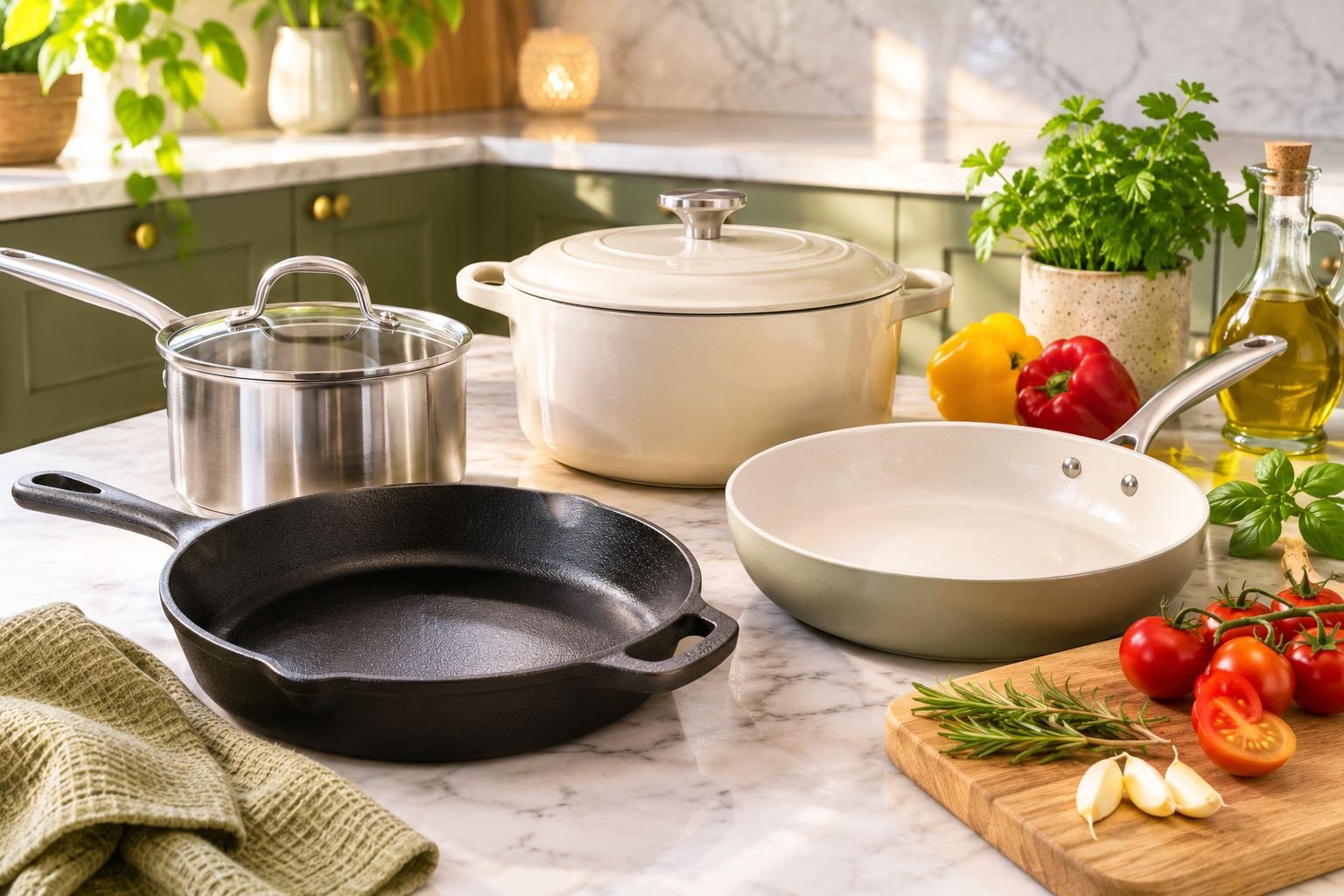
The short answer
The safest everyday cookware is uncoated: stainless steel, cast iron, carbon steel and enameled cast iron. There's no coating to wear off, and they last for decades. The Cuisinart MultiClad Pro stainless set and a Lodge cast iron skillet cover most cooking. If you want nonstick without PTFE (Teflon) or other PFAS, choose a ceramic-coated pan like the GreenPan Valencia Pro set or the budget SENSARTE pan, and replace it when the coating wears. Modern PTFE nonstick is considered safe in normal use, but it must never be overheated, so many people now prefer to avoid it.
- Uncoated stainless steel, cast iron, carbon steel and enameled cast iron are the safest long-term choices.
- PTFE (Teflon) is a type of PFAS. It's considered safe at normal cooking temperatures but gives off harmful fumes if overheated.
- PFOA, the chemical behind most Teflon health worries, was phased out of US nonstick manufacturing by 2015.
- Ceramic nonstick is PTFE- and PFAS-free but wears out faster. Treat it as a pan you'll replace.
- Replace any nonstick pan that is badly scratched, flaking or no longer slick.
“Non-toxic cookware” is one of the most confusing topics in the kitchen. You’ll find scary claims about every material, and plenty of brands are happy to sell you a $500 set to fix the fear. The truth is calmer and simpler: some materials need no special care at all, some need a bit of care, and one rule matters for nonstick: don’t overheat it.
This guide explains what’s actually known about each material, the questions people ask most, and the pans we’d buy. Most of the picks are sold on both Amazon US and Amazon Australia.
The short version
| Material | Safety | Durability | Nonstick? | Our verdict |
|---|---|---|---|---|
| Stainless steel | Excellent | Decades | No (use oil and preheat) | Best all-rounder |
| Cast iron | Excellent | Generations | Yes, once seasoned | Best for searing and frying |
| Carbon steel | Excellent | Decades | Yes, once seasoned | Lighter cast-iron alternative |
| Enameled cast iron | Excellent (reputable brands) | Decades | Partly | Best for stews and braises |
| Ceramic nonstick | Very good (PTFE- and PFAS-free) | 1–3 years | Yes, while new | Best PFAS-free nonstick |
| PTFE nonstick (Teflon) | Good, if never overheated | 3–5 years | Excellent | Fine with care; many now avoid it |
| Uncoated aluminium | Fair | Long | No | Avoid for acidic foods |
Our picks at a glance
| Feature | Best overallCuisinart MultiClad Pro 12-Piece Stainless Steel Cookware Set | Best ceramic setGreenPan Valencia Pro 11-Piece Ceramic Nonstick Set | Budget nonstickSENSARTE Ceramic Nonstick Frying Pan |
|---|---|---|---|
| Best for | A complete, coating-free set that lasts for decades | Replacing an old Teflon set with ceramic nonstick in one go | Eggs and delicate foods if you want a PTFE-free nonstick pan for less |
| Price band | Mid-range | Premium | Budget |
| Material | Tri-ply stainless steel | Hard-anodised aluminium | Aluminium |
| Coating | None (bare stainless) | Ceramic (PFAS-free) | Ceramic (PTFE- and PFAS-free) |
| Oven safe | Yes | — | — |
| Induction | Yes | Yes | Check size and listing |
| Where to buy | Check price | Check price | Check price |
Best overall: Cuisinart MultiClad Pro stainless steel set
If you want one set that’s safe, versatile and will last for decades, choose tri-ply stainless steel. There’s no coating to scratch, chip or wear off. The MultiClad Pro’s aluminium core runs up the sides of each pan, so it heats evenly. It’s oven safe and works on induction, and many cooks recommend it as a lower-cost alternative to All-Clad. Rated 4.5 stars by more than 10,000 owners in each store.
The trade-offs: food will stick until you learn the trick: preheat the pan, then add oil, then add food. It’s also heavier than nonstick.
Best for searing: Lodge cast iron skillet
Cast iron is about as simple and safe as cookware gets: just iron and a layer of baked-on oil (seasoning). Once seasoned it’s naturally nonstick, it goes from stove to oven to campfire, and it will outlive you. We cover it in depth in our guide to the best cast iron skillets.
The trade-offs: it’s heavy, needs drying and a little oil after washing, and long simmers of very acidic sauces can strip the seasoning.
Best ceramic nonstick set: GreenPan Valencia Pro
If you want to replace an old Teflon set with nonstick that’s made without PTFE or other PFAS, GreenPan is the brand that pioneered ceramic coatings. Valencia Pro is its sturdier line, with hard-anodised bodies that heat evenly, induction-ready bases and oven-safe construction.
The trade-offs: like every ceramic coating, it loses its slickness faster than PTFE. Cook on low to medium heat, use wooden or silicone utensils, and hand-wash to make it last.
Budget pick: SENSARTE ceramic frying pan
You don’t need a whole set to go PTFE-free. A single ceramic frying pan for eggs and delicate fish, plus stainless or cast iron for everything else, covers most kitchens. This budget pan is rated 4.4 stars by nearly 36,000 US owners and is cheap enough to replace when the coating wears.
Want to spend more? Enameled cast iron
For soups, stews and braises, an enameled cast-iron pot or skillet is a lifetime buy. The glass-like enamel doesn’t react with acidic food and needs no seasoning. See the Le Creuset pick in our cast iron skillet guide.
PTFE, PFOA and PFAS, explained simply
- PFAS are a large family of long-lasting “forever chemicals” used in many products, including some nonstick coatings, waterproof clothing and food packaging.
- PTFE (best known as Teflon) is the slick coating on most traditional nonstick pans. It is a type of PFAS. It’s very stable at normal cooking temperatures, but it starts to break down if overheated (above about 260 °C / 500 °F), releasing fumes.
- PFOA was a chemical once used to make PTFE. It was linked to health concerns and was phased out of US nonstick manufacturing by 2015. That’s why pans now say “PFOA-free”.
- “PFAS-free” usually means the pan has a ceramic coating or no coating at all.
Because PFAS persist in the environment, some governments have started restricting them, and many people now choose PFAS-free cookware as a precaution. That’s a reasonable choice, but there’s no need to panic about the pan you already own.
If you keep using PTFE nonstick
- Never preheat it empty on high heat. That’s how it gets dangerously hot within minutes.
- Cook on low to medium heat. Nonstick doesn’t need more.
- Ventilate. Use the range hood, especially if you have pet birds, which are very sensitive to fumes.
- Use wooden or silicone utensils and hand-wash.
- Replace it when it’s scratched, flaking or no longer slick.
How to switch without wasting money
You don’t need to throw everything out at once:
- Start with one stainless frying pan or a cast iron skillet for searing, frying and roasting.
- Add a stainless saucepan or an enameled pot for sauces, soups and pasta.
- Keep one small ceramic pan for eggs and pancakes.
- Retire old nonstick as it wears out.
Making uncoated pans less sticky
- Stainless: preheat the dry pan for 1–2 minutes, add oil, wait until it shimmers, then add food. Let food release on its own before flipping.
- Cast iron and carbon steel: keep them seasoned with a thin layer of oil after each wash, and cook a few fatty meals early on.
- Enameled cast iron: use medium heat and a little fat. It’s semi-nonstick and easy to soak clean.
Still deciding between materials? Read our side-by-side comparison of cast iron vs carbon steel vs nonstick pans.
Common questions
What is the safest cookware to use?
Stainless steel, cast iron, carbon steel and enameled cast iron are widely considered the safest everyday choices. They have no synthetic nonstick coating to wear off, they handle high heat, and they last for decades. Glass and good-quality ceramic bakeware are also safe for the oven.
Is Teflon (PTFE) nonstick cookware safe?
Modern PTFE nonstick is considered safe for normal cooking. The main risk is overheating. Above about 260 °C (500 °F), PTFE coatings start to break down and release fumes that can cause flu-like symptoms in people and can be deadly to pet birds. Never preheat an empty nonstick pan on high heat, and replace pans that are flaking.
Is PTFE the same as PFOA?
No. PFOA was a chemical once used to make PTFE coatings and was linked to health concerns. It was phased out of nonstick manufacturing in the US by 2015, so modern pans labelled "PFOA-free" don't use it. PTFE itself is still a type of PFAS, which is why some people now avoid it, and some places have started restricting PFAS in cookware.
Is ceramic nonstick cookware safe?
Ceramic nonstick (a silica-based sol-gel coating) is made without PTFE or other PFAS and is generally considered safe. Its main drawback is durability. The slick surface wears faster than PTFE, especially with high heat, metal utensils or dishwashers. Choose a reputable brand and replace it when food starts to stick.
Is stainless steel cookware non-toxic?
Yes, for most people. Good stainless steel is stable and doesn't react much with food. Very small amounts of nickel and chromium can transfer, especially during long simmers of acidic foods, which matters mainly for people with a nickel allergy. Nickel-free stainless or cast iron are alternatives for them.
Is cast iron healthy to cook with?
Yes. Cast iron can add a small amount of dietary iron to food, which is harmless or even helpful for most people. People with iron-overload conditions such as haemochromatosis may want to limit it. Keep it seasoned so it stays nonstick and rust-free.
Is aluminium cookware safe?
Hard-anodised and coated aluminium is sealed and doesn't react with food. Plain, uncoated aluminium can react with acidic or salty foods, which affects taste and can transfer a little metal, so use it mainly for non-acidic cooking.
When should I throw away a nonstick pan?
When the coating is deeply scratched, chipped or flaking, or when food sticks no matter what you do. For PTFE pans that's often after 3–5 years of regular use, and for ceramic pans often sooner.
Is enameled cast iron safe?
Yes, from reputable brands. Enamel is a glass coating that doesn't react with food. Be cautious with very old, vintage or unbranded enameled pots, as some older glazes contained lead. Replace pots with chipped enamel on the cooking surface.
Sources
Keep reading
The Best Dutch Oven: Enameled vs Cast Iron, What Size, and Is Le Creuset Worth It?
The best Dutch ovens for stews, braises and bread, enameled vs bare cast iron, what size to buy, and whether Le Creuset is worth the price.
How to Season Cast Iron: The Oven Method, Best Oils and How to Fix Sticky or Rusty Pans
How to season a cast iron skillet in the oven, which oil to use, how often to do it, and how to fix sticky, patchy or rusty seasoning, step by step.

Best Cast Iron Skillets: Budget, Mid-Range and Premium Picks
The cast iron skillets worth buying — a budget workhorse, a smaller everyday pan and an enameled premium pick, all sold on Amazon US and Australia.