How to Season Cast Iron: The Oven Method, Best Oils and How to Fix Sticky or Rusty Pans
How to season a cast iron skillet in the oven, which oil to use, how often to do it, and how to fix sticky, patchy or rusty seasoning, step by step.
We earn a commission if you buy through links on this page, at no extra cost to you. Learn more.
The short answer
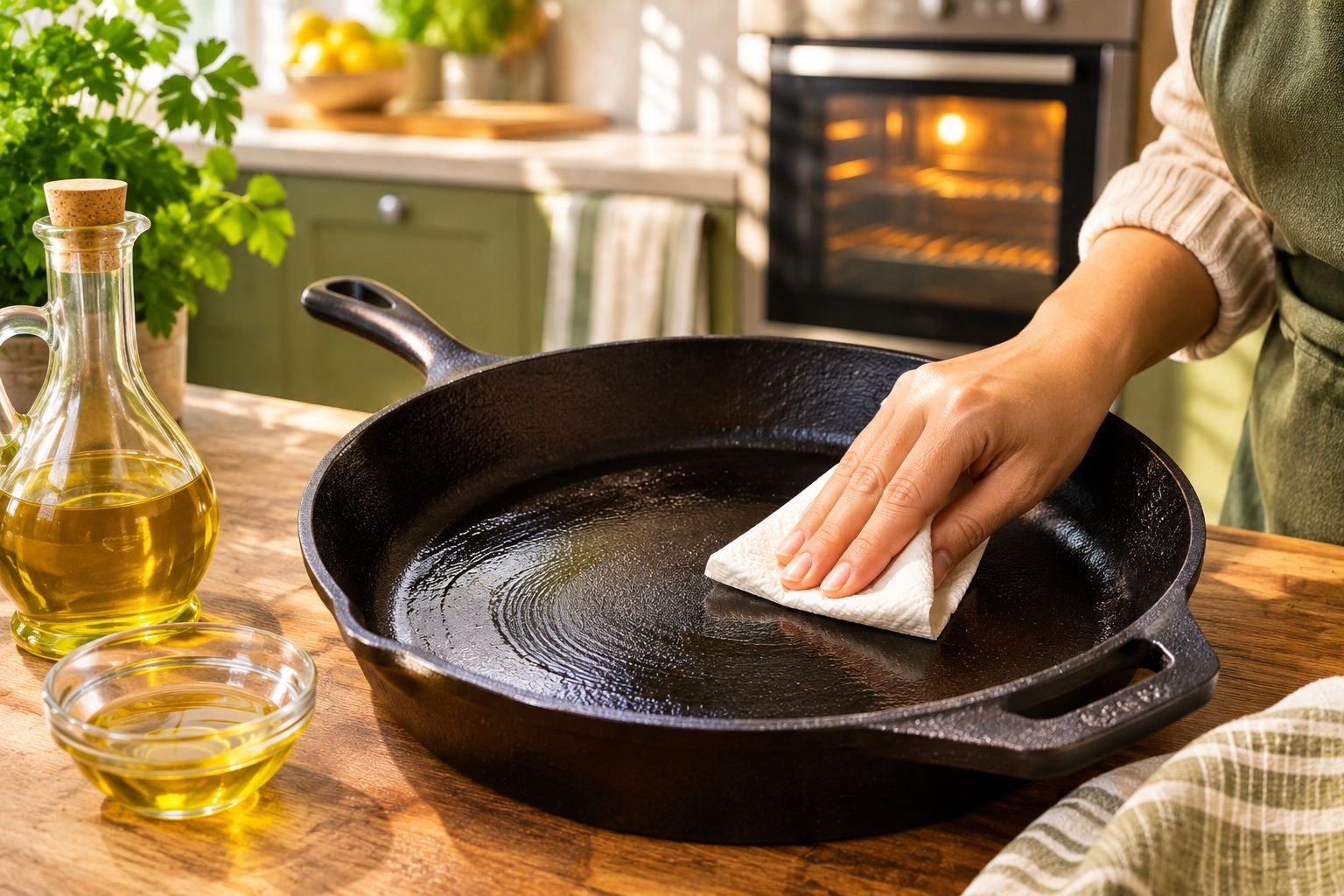
To season cast iron, wash and dry the pan completely, rub a very thin layer of neutral oil (vegetable, canola or shortening) over every surface, then wipe it off until the pan looks almost dry. Bake it upside down at 230–260 °C (450–500 °F) for one hour and let it cool in the oven. Repeat 3–4 times for a new, stripped or rusty pan. After that, keep it seasoned by cooking with fat, drying it on the stove after washing, and wiping on a drop of oil while it's warm. Sticky seasoning means too much oil, so bake it again.
- Seasoning is oil baked into a hard, slick coating. Thin layers are everything; too much oil turns sticky.
- Bake upside down at 230–260 °C (450–500 °F) for an hour, and repeat 3–4 times to build a base layer.
- Everyday cooking with oil keeps adding seasoning. You rarely need the oven method again.
- A little dish soap is fine. Soaking, the dishwasher and leaving it wet are what cause rust.
- Rust and sticky patches are easy to fix with a scrub and a re-season.
Cast iron has a reputation for being fussy, but seasoning it is simple once you know the one rule that matters: thin layers of oil, baked hot. Most problems, like sticky patches, flaking and food that won’t release, come from using too much oil or not getting the pan hot enough.
This guide walks you through the full oven method, shows you which oil to use, and explains how to fix every common problem. It also covers the small daily habits that keep a pan nonstick for life.
New to cast iron? Start with our guide to the best cast iron skillets.
What “seasoning” actually is
Seasoning isn’t a coating you buy. It’s oil that has been heated past its smoke point until it bonds to the iron as a hard, slick, slightly plastic-like layer (the process is called polymerisation). Each thin layer adds to the last. A well-seasoned pan is black, smooth and naturally nonstick, and it protects the iron from rust.
What you need
- A cast iron pan
- A neutral oil (vegetable, canola or shortening) or a seasoning spray
- Paper towels or a lint-free cloth
- An oven and a sheet of foil or a baking tray for the rack below
- For rusty pans: steel wool or a chainmail scrubber
How to season cast iron in the oven (step by step)
- Preheat the oven to 230–260 °C (450–500 °F). Put foil or a tray on the lower rack to catch any drips.
- Wash the pan with warm water and a little dish soap. Scrub off any rust or stuck food.
- Dry it completely. Towel it off, then heat it on the stove for a few minutes until every drop of moisture is gone.
- Apply a thin layer of oil to every surface: the inside, the outside and the handle. About half a teaspoon is enough for a 25 cm (10 in) skillet.
- Wipe it off. Use a clean paper towel to buff off as much oil as you can, as if you’d put it on by mistake. The pan should look almost dry. This is the most important step.
- Bake upside down for one hour. Upside down lets any excess drain off instead of pooling.
- Turn the oven off and let the pan cool inside.
- Repeat 3–4 times for a new bare, stripped or rusty pan. Each round adds a thin, hard layer.
Which oil is best for seasoning?
| Oil | Smoke point | Result | Our take |
|---|---|---|---|
| Vegetable / canola | High | Even, durable layer | The easy, reliable choice |
| Vegetable shortening | High | Even, durable layer | A classic, and what many old cooks swear by |
| Seasoning spray | High | Very thin, even coat | Easiest way to avoid using too much |
| Flaxseed | Low | Very hard but can flake | Not worth the trouble for most people |
| Olive oil | Medium | Works for cooking-in seasoning | Fine day to day, less ideal for the oven method |
| Butter | Low | Burns | Avoid for seasoning |
The amount matters much more than the type. Any of the top three, applied thinly, works well.
Everyday care: keeping cast iron seasoned
Once you have a good base, cooking does most of the work:
- Cook with a little fat. Every time you fry or sear, you’re adding seasoning.
- Clean while it’s warm. Rinse with hot water and a little soap if needed. Use a scraper or a chainmail scrubber for stuck food.
- Dry it on the stove for a minute or two.
- Wipe on a drop of oil while it’s warm, then buff it off.
- Store it dry, with a paper towel inside if it’s stacked or in a humid kitchen.
Fixing common seasoning problems
| Problem | Cause | Fix |
|---|---|---|
| Sticky or tacky surface | Too much oil, or the oven wasn’t hot enough | Bake upside down at 230–260 °C (450–500 °F) for another hour |
| Patchy, brown spots | Seasoning worn by acidic food or scrubbing | Cook a few fatty meals, or do 1–2 oven rounds |
| Rust | Left wet, soaked or put in the dishwasher | Scrub to bare iron, dry fully, then season 3–4 times |
| Black flakes | Thick, old seasoning or burnt food lifting off | Scrub off the loose bits and re-season thinly |
| Food sticks | Pan not hot enough, too little fat, or young seasoning | Preheat for 3–5 minutes, use more oil, and keep cooking |
| Smells rancid | Oil left too thick for too long | Wash, dry, and bake once to refresh |
What not to do with cast iron
- Don’t soak it in the sink or leave it wet.
- Don’t put it in the dishwasher. It will rust.
- Don’t store food in it for long, especially acidic sauces.
- Don’t heat it empty on high for ages, or plunge a hot pan into cold water. Sudden temperature changes can crack it.
How long does it take to build good seasoning?
After 3–4 oven rounds, a pan is ready to use. It becomes properly nonstick, good enough for eggs, after a few weeks of regular cooking with fat. Older pans that have been used for years are slick because of thousands of thin layers, and your pan will get there too.
Curious how cast iron compares to other pans? Read our guides to cast iron vs carbon steel vs nonstick and non-toxic cookware.
Common questions
What is the best oil to season cast iron?
Any neutral oil with a fairly high smoke point works well. Vegetable oil, canola oil and vegetable shortening are the most common choices. Lodge seasons its pans with a soy-based vegetable oil and recommends vegetable or canola oil at home. Flaxseed oil makes a very hard finish but can flake, so many cooks avoid it. Avoid butter for seasoning, because the milk solids burn.
How often should I season my cast iron?
You only need the full oven method for a new bare pan, after stripping rust, or when the seasoning looks patchy. For everyday care, wipe a drop of oil on the warm, dry pan after washing. Regular cooking with oil keeps adding seasoning on its own.
What temperature should I season cast iron at?
Around 230–260 °C (450–500 °F), for one hour. The oil needs to get hot enough to polymerise into a hard coating rather than just sit on the surface. Turn on the range hood, because it will smoke a little.
Why is my cast iron sticky after seasoning?
Too much oil, or the oven wasn't hot enough. The extra oil didn't fully harden. Put it back in a 230–260 °C (450–500 °F) oven for another hour. Next time, wipe the oil off until the pan looks almost dry before baking.
Can I use soap on cast iron?
Yes, a little mild dish soap is fine on seasoned cast iron. Modern dish soap doesn't strip polymerised seasoning. Avoid soaking the pan, the dishwasher and harsh scouring of the whole surface.
How do I fix a rusty cast iron pan?
Scrub the rust off with steel wool or a stiff brush and a little soapy water until you see bare grey iron. Rinse, dry completely on the stove, then do the full oven seasoning 3–4 times. Light surface rust is usually only on the surface and doesn't ruin the pan.
Do pre-seasoned cast iron pans need seasoning?
Not before first use. Pre-seasoned pans like Lodge are ready to cook with. Their factory seasoning is thin, though, so cooking with a little extra fat for the first few weeks, or adding one or two oven layers, makes them more nonstick sooner.
Can I season cast iron on the stovetop?
Yes, for quick touch-ups. Heat the clean, dry pan until it just starts to smoke, wipe on a very thin layer of oil, and let it smoke for a few minutes before cooling. The oven method gives a more even coat, especially on the handle and outside.
Is black flaking from my cast iron dangerous?
Usually not. It's normally carbonised food or seasoning that has flaked off, often from a layer that was too thick. Scrub the loose bits off, then re-season with thin coats.
Sources
Keep reading
The Best Dutch Oven: Enameled vs Cast Iron, What Size, and Is Le Creuset Worth It?
The best Dutch ovens for stews, braises and bread, enameled vs bare cast iron, what size to buy, and whether Le Creuset is worth the price.
Non-Toxic Cookware: What's Actually Safe to Cook With (Without the Fear-Mongering)
What non-toxic cookware really means, whether Teflon and ceramic are safe, and the safest pots and pans to buy, from stainless and cast iron to ceramic.

Best Cast Iron Skillets: Budget, Mid-Range and Premium Picks
The cast iron skillets worth buying — a budget workhorse, a smaller everyday pan and an enameled premium pick, all sold on Amazon US and Australia.