The Best Dutch Oven: Enameled vs Cast Iron, What Size, and Is Le Creuset Worth It?
The best Dutch ovens for stews, braises and bread, enameled vs bare cast iron, what size to buy, and whether Le Creuset is worth the price.
We earn a commission if you buy through links on this page, at no extra cost to you. Learn more.
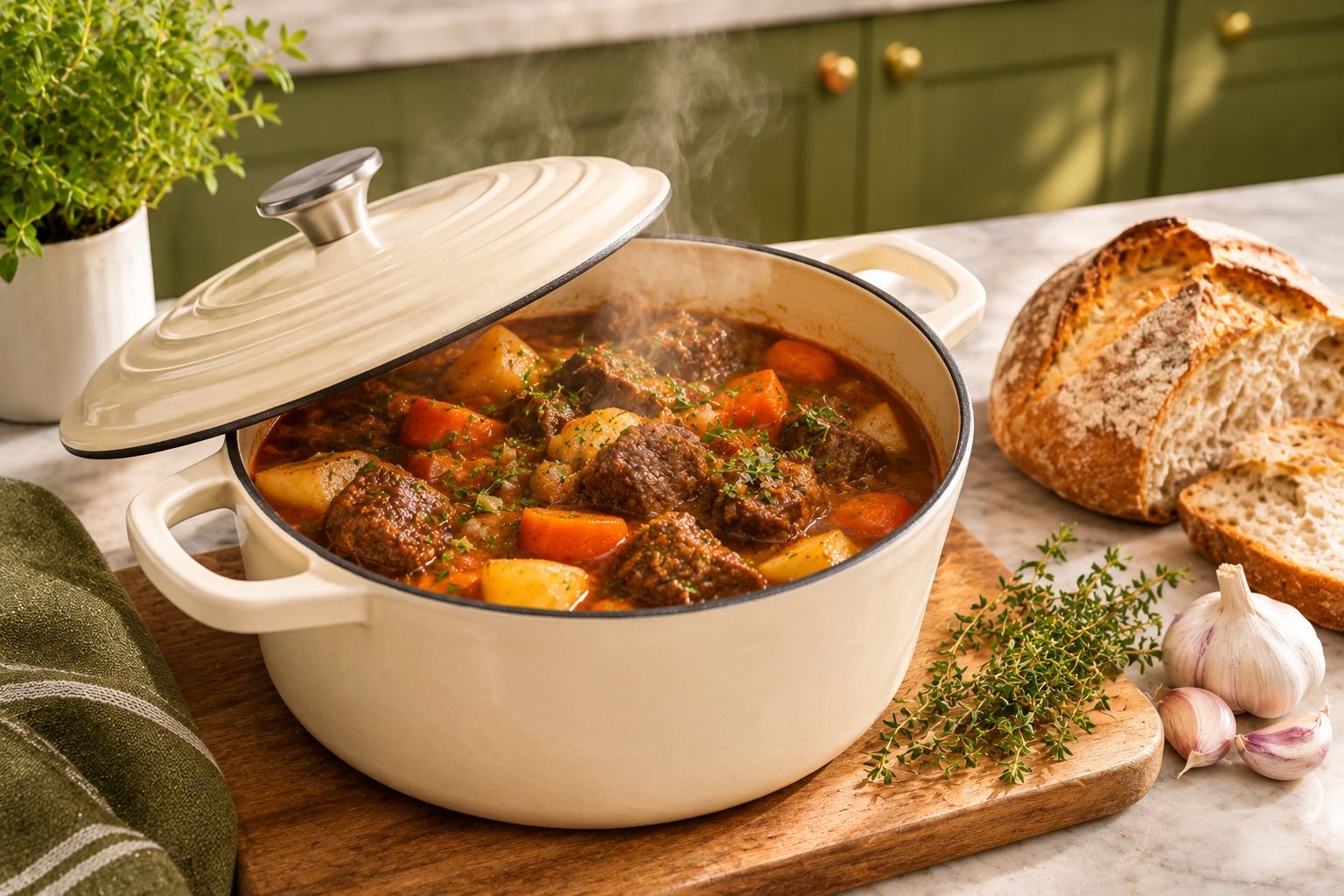
The short answer
For most people, the Lodge 6-quart enameled cast iron Dutch oven is the best Dutch oven. It cooks almost as well as pots that cost five times as much, needs no seasoning, and is the most popular Dutch oven on Amazon. If you want a pot to last a lifetime, with the toughest enamel and a lifetime warranty, the Le Creuset 5.5-quart (26 cm) is worth it. For crusty bread, deep frying or camping, a bare cast iron Lodge Dutch oven is cheap and can't chip. A 5.5–6 quart (about 5–6 L) pot suits most families.
- Enameled cast iron is the best all-rounder. No seasoning, and it handles acidic tomato and wine sauces.
- Bare cast iron is cheaper, can't chip and is best for bread and camping, but needs seasoning.
- 5.5–6 quarts (about 5–6 L) suits most families of 2–6 people.
- Le Creuset's main advantages are durability, a light interior and a lifetime warranty, not better cooking.
- Avoid thermal shock. Don't put cold water in a hot pot or a cold pot on high heat.
A Dutch oven is the most versatile pot you can own. It sears, simmers, braises, deep fries and bakes the best crusty bread you’ll make at home, all in one heavy pot that goes from stovetop to oven to table.
The hard part is the price range. You can pay a few dozen dollars or several hundred for what looks like the same pot. This guide explains the real difference and helps you choose the right size, with three picks for different needs.
All three picks are sold on Amazon US and Amazon Australia.
Our picks at a glance
| Feature | Best valueLodge Essential Enameled Cast Iron Dutch Oven, 6 Quart | Premium pickLe Creuset Signature Round Dutch Oven, 5.5 Quart (26 cm) | Best for bread and campingLodge Pre-Seasoned Cast Iron Dutch Oven, 5 Quart |
|---|---|---|---|
| Best for | Most home cooks — soups, stews, braises and bread for a family | A lifetime pot with the best enamel and a lifetime warranty | Crusty bread, deep frying, camping and very high heat |
| Price band | Budget | Premium | Budget |
| Material | Enameled cast iron | Enameled cast iron | Pre-seasoned bare cast iron |
| Size | 6 qt (about 5.7 L) | 5.5 qt (26 cm) | 5 qt (about 4.7 L) |
| Induction | Yes | Yes | Yes |
| Oven safe | Yes | Yes | Yes |
| Where to buy | Check price | Check price | Check price |
Best value: Lodge 6-quart enameled Dutch oven
This is the Dutch oven we’d tell most people to buy. It has a heavy cast iron body for even, steady heat, a smooth enameled interior that needs no seasoning, and a snug lid that keeps braises moist. It handles acidic tomato and wine sauces without trouble and goes into a hot oven for bread. With almost 40,000 US ratings at 4.7 stars, it’s the most popular Dutch oven on Amazon.
The trade-offs: budget enamel can chip more easily than premium brands if it’s knocked or heated empty on high, so treat it gently.
Best premium pick: Le Creuset Signature 5.5-quart (26 cm)
Le Creuset is the pot people pass down. You’re not paying for dramatically better cooking. You’re paying for:
- Tougher enamel that resists chipping and staining
- A light interior that makes it easy to see browning and fond
- Large handles that are easy to grab with oven mitts
- A lifetime warranty
If you cook stews, soups and bread every week and want one pot for decades, it’s worth the money. If budget matters, the Lodge gets you most of the way there.
Best for bread and camping: Lodge pre-seasoned cast iron Dutch oven
A bare cast iron Dutch oven is cheap, can’t chip, and handles the very high oven temperatures that no-knead bread loves. It also goes straight onto a campfire. It needs the same care as a cast iron skillet. See our guide to how to season cast iron.
The trade-offs: it needs seasoning, and long simmers of acidic sauces can strip it.
What size Dutch oven do you need?
| Household | Size | Australian sizing (approx.) |
|---|---|---|
| 1–2 people | 3.5–4 qt | 22–24 cm (about 3.3–4.2 L) |
| 2–6 people (most families) | 5.5–6 qt | 26–28 cm (about 5.3–6.7 L) |
| Big families, batch cooking | 7+ qt | 28–30 cm (about 6.7–8.1 L) |
| Bread baking | 5–6 qt round | 24–26 cm |
Round or oval? Round suits most stovetops, soups and bread. Oval fits whole chickens and long roasts but heats less evenly on a round burner.
Enameled vs bare cast iron
| Enameled cast iron | Bare cast iron | |
|---|---|---|
| Seasoning | Not needed | Needed |
| Acidic foods (tomato, wine) | Great | Can strip seasoning |
| Very high heat (bread, frying) | Check the knob’s rating | Excellent |
| Chipping | Can chip if knocked | Can’t chip |
| Cleaning | Soap and water | Gentle, then dry and oil |
| Price | Budget to premium | Cheapest |
How to look after a Dutch oven
- Avoid thermal shock. Don’t pour cold water into a hot pot or put a cold pot on high heat.
- Heat gradually on low to medium. Cast iron holds heat, so you rarely need high.
- Use wooden or silicone utensils on enamel.
- Clean stuck food by simmering water with a spoonful of baking soda, then scrubbing gently.
- Dry fully and store with the lid ajar so moisture can escape.
- Check the lid knob’s heat rating before baking bread in a very hot oven.
Dutch oven vs slow cooker vs pressure cooker
- Dutch oven: the best browning and flavour, works in the oven and on the stovetop, and bakes bread. Needs you nearby.
- Slow cooker: set and forget all day, but no real browning.
- Pressure cooker: the fastest for stews and beans, but less flavour development.
Many cooks own a Dutch oven and one of the others. If you only buy one, buy the Dutch oven.
More cast iron: the best cast iron skillets and non-toxic cookware.
Common questions
What size Dutch oven should I buy?
A 5.5–6 quart (about 5–6 litre) round Dutch oven suits most households of 2–6 people. It's big enough for a whole chicken, a pot of soup or a loaf of bread. Choose 3.5–4 quarts for one or two people, and 7 quarts or more for big families and batch cooking. In Australia, sizes are usually given in centimetres. 24 cm is about 4.2 L and 26 cm is about 5.3 L.
Is Le Creuset worth the money?
If you'll use it often and keep it for decades, yes. Le Creuset's enamel is tougher and less likely to chip, its light interior makes browning easy to see, and it has a lifetime warranty. But a good budget enameled Dutch oven cooks almost as well, so if price matters, Lodge is the smarter buy.
What's the difference between Le Creuset and Staub?
Both are excellent French enameled cast iron. Le Creuset has a light, glossy interior that shows browning. Staub has a dark matte interior that hides stains and browns well, plus a lid with self-basting bumps. It mostly comes down to looks and preference.
Enameled or bare cast iron Dutch oven?
Enameled is best for most cooking. It needs no seasoning and handles acidic foods like tomato sauces and wine braises. Bare cast iron is cheaper, can't chip and handles very high heat, so it's great for bread baking, deep frying and campfires, but it needs seasoning and doesn't love long-simmered acidic sauces.
Can a Dutch oven go on an induction cooktop?
Yes. Cast iron is magnetic, so both enameled and bare cast iron Dutch ovens work on induction. Lift rather than slide it to avoid scratching glass cooktops.
Can you bake bread in a Dutch oven?
Yes. It's one of the best ways to bake crusty bread at home. Preheat the empty pot with its lid in a hot oven, add the dough, bake covered so the steam crisps the crust, then uncover to brown. Check the lid knob's heat rating, because some knobs are only rated to about 190–250 °C.
How do I clean an enameled Dutch oven?
Let it cool, then soak and wash with warm soapy water and a non-scratch sponge. For stuck-on food, simmer water with a spoonful of baking soda for a few minutes, then scrub gently. Avoid metal scourers and sudden temperature changes, which can chip or crack the enamel.
Sources
Keep reading
How to Season Cast Iron: The Oven Method, Best Oils and How to Fix Sticky or Rusty Pans
How to season a cast iron skillet in the oven, which oil to use, how often to do it, and how to fix sticky, patchy or rusty seasoning, step by step.
Non-Toxic Cookware: What's Actually Safe to Cook With (Without the Fear-Mongering)
What non-toxic cookware really means, whether Teflon and ceramic are safe, and the safest pots and pans to buy, from stainless and cast iron to ceramic.

Best Cast Iron Skillets: Budget, Mid-Range and Premium Picks
The cast iron skillets worth buying — a budget workhorse, a smaller everyday pan and an enameled premium pick, all sold on Amazon US and Australia.