The Best Electric Kettles: Fast, Plastic-Free and Gooseneck Picks
The best electric kettles for tea, coffee and everyday use, plastic-free vs gooseneck explained, water temperatures for every drink, and how to descale.
We earn a commission if you buy through links on this page, at no extra cost to you. Learn more.
The short answer
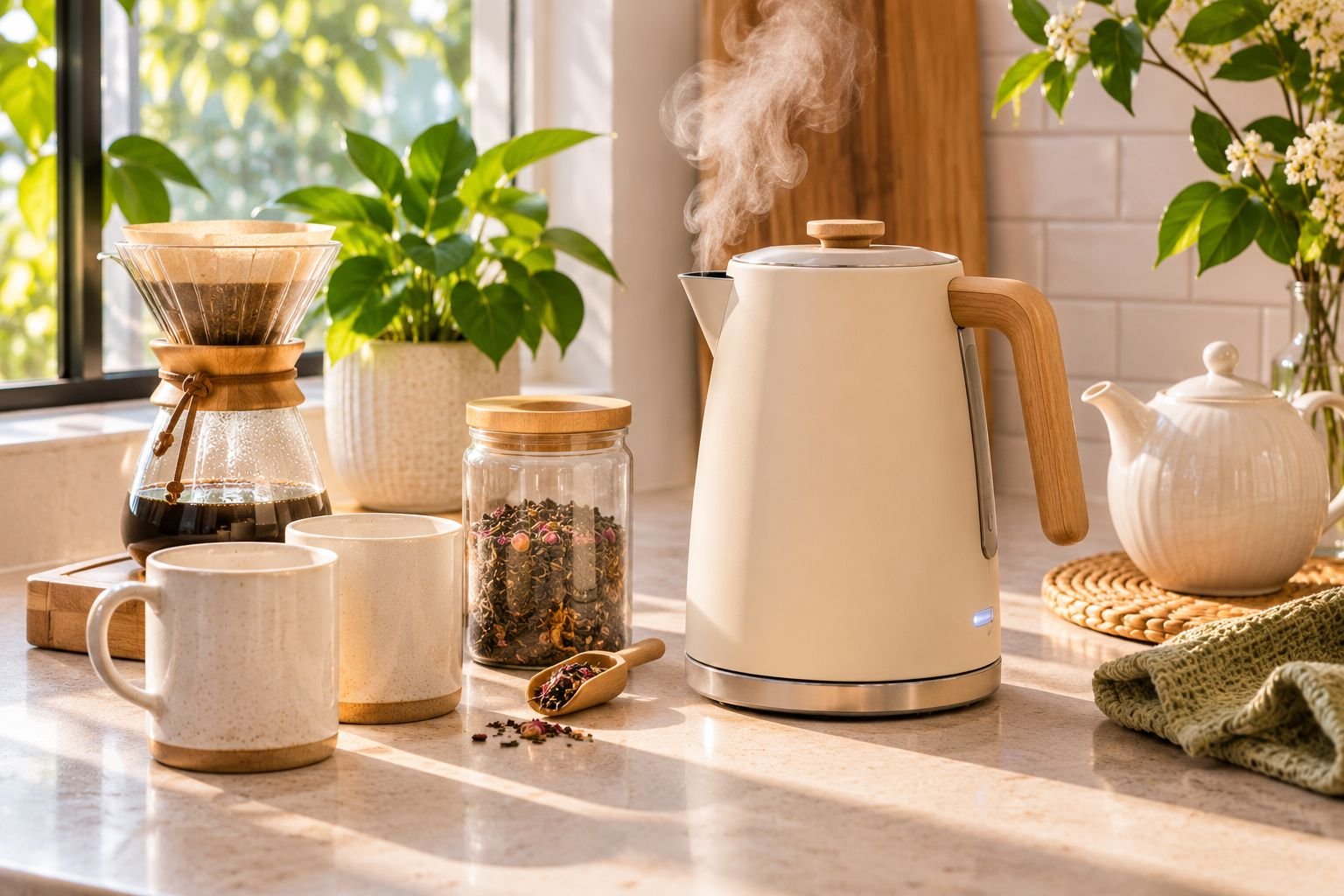
For most homes, the Cosori 1.7 L kettle is the best electric kettle: it's stainless steel inside so no plastic touches the water, it boils fast, and nearly 50,000 owners rate it 4.5 stars. On a tight budget, the COMFEE' 1.7 L stainless kettle is simple and reliable. For pour-over coffee or green tea, choose a gooseneck kettle with temperature control like the Cosori gooseneck. US kettles run on 120V, so Australian readers should buy a local 230–240V kettle. Our Australian links show local models.
- Look for stainless steel or glass inside, with no plastic touching the water.
- A gooseneck spout and temperature control matter for pour-over coffee and delicate teas.
- Boiling only the water you need saves time and power.
- Descale every few weeks to months in hard water areas, so it boils faster and lasts longer.
- Kettles are country-specific. Australian homes need a 230–240V kettle.
A good electric kettle is one of the most-used appliances in the kitchen. It’s quicker and more efficient than boiling water on the stove, and the right one makes better tea and coffee. The best kettles boil fast, pour cleanly and don’t let the water touch plastic.
This guide picks the best electric kettles for everyday boiling, tea and pour-over coffee, explains which features matter, and shows you how to keep yours scale-free.
All picks were checked on Amazon US and Amazon Australia. Kettles are country-specific, so Australian readers are shown local 230–240V models.
Our picks at a glance
| Feature | Best budgetCOMFEE' Stainless Steel Electric Kettle (1.7 L) | Best overallCosori Electric Kettle, No Plastic Contact with Water (1.7 L) | Best for coffee and teaCosori Gooseneck Electric Kettle with Temperature Control (0.8 L) |
|---|---|---|---|
| Best for | A cheap, reliable everyday kettle | Most homes; fast boiling with no plastic touching the water | Pour-over coffee, green tea and anyone who wants exact temperatures |
| Price band | Budget | Budget | Mid-range |
| Capacity | 1.7 L | 1.7 L | 0.8 L |
| Temperature control | No | No | Yes |
| Keep warm | No | No | Yes |
| Where to buy | Check price | Check price | Check price |
Best overall: Cosori 1.7 L kettle (no plastic contact)
The Cosori is stainless steel inside, including the lid, so no plastic touches the water. It boils quickly, switches off automatically, and has boil-dry protection. With nearly 50,000 ratings at 4.5 stars, it’s one of the most popular kettles on Amazon.
The trade-offs: the outside gets hot because it isn’t double-walled, and there are no temperature settings.
Best budget: COMFEE’ 1.7 L stainless kettle
If you just want a reliable kettle that boils water, the COMFEE’ does the job for very little. It has a stainless steel body, auto shut-off and boil-dry protection, and more than 16,000 owners rate it 4.6 stars.
The trade-offs: there are no temperature settings or keep-warm function.
Best for coffee and tea: Cosori gooseneck kettle
If you make pour-over coffee or drink green tea, a gooseneck kettle with temperature control is a real upgrade. The thin spout gives a slow, precise pour, and the presets heat water to exactly the right temperature, then keep it warm. More than 17,000 owners rate it 4.6 stars.
The trade-offs: it only holds 0.8 litres, so it’s slower if you’re making tea for a crowd.
Which kettle do you need?
| Your situation | Best type | Why |
|---|---|---|
| Everyday tea, instant coffee, cooking | Standard 1.7 L kettle | Fast, big capacity |
| Don’t want plastic touching water | Stainless steel or glass interior | Cleaner taste |
| Pour-over coffee | Gooseneck with temperature control | Slow, precise pour |
| Green, white or oolong tea | Temperature control | Avoids bitter, scalded tea |
| Small kitchen or 1–2 people | 1 L or smaller | Less to boil, less space |
| Big family | 1.7 L or more | Fewer refills |
Water temperatures for every drink
| Drink | Water temperature |
|---|---|
| Green tea and white tea | 70–80°C (158–176°F) |
| Oolong tea | 85–90°C (185–194°F) |
| Pour-over and French press coffee | 90–96°C (195–205°F) |
| Black tea and herbal tea | 100°C (212°F), boiling |
| Instant noodles, oats, cooking | 100°C (212°F), boiling |
Save power with your kettle
Kettles draw a lot of power for a short time, so a few habits make a difference:
- Boil only what you need. Which? found that boiling a litre of water often uses more than twice the energy of boiling the minimum amount.
- Choose a kettle with a low minimum fill, so you can boil a single cup.
- Descale regularly. Which? advises that a kettle full of limescale uses more energy to boil the same water.
In Australia, Canstar Blue estimates a single boil costs around 5 to 6 cents, and boiling twice a day adds roughly $30–$40 a year to your power bill.
How to descale an electric kettle
- Fill the kettle halfway with equal parts water and white vinegar, or water with a tablespoon of citric acid.
- Bring it to the boil, then switch off and let it sit for 20–30 minutes.
- Empty it and wipe away any loose scale with a soft cloth.
- Rinse well, then fill with fresh water, boil and empty it once or twice to remove any taste.
- Repeat every few weeks to months, depending on how hard your water is.
Electric kettle safety tips
- Never fill above the MAX line, or boiling water can spit from the spout.
- Keep the cord tucked back from the bench edge, away from children.
- Don’t immerse the kettle base in water.
- Replace a kettle if the switch stops turning off, or if it leaks.
Brewing coffee at home? See our guides to the best non-toxic cookware and the best food storage containers.
Common questions
What should I look for in an electric kettle?
A stainless steel or glass interior with no plastic touching the water, automatic shut-off, boil-dry protection, a comfortable handle, a clear water window and a low minimum fill. Add temperature control if you drink green tea or pour-over coffee.
Is a gooseneck kettle worth it?
For pour-over coffee, yes. The thin spout gives a slow, precise pour that helps extract coffee evenly. For tea and everyday boiling, a standard kettle pours faster.
Are plastic kettles safe?
Most modern kettles use food-grade, BPA-free plastics, but many people prefer stainless steel or glass interiors so hot water doesn't touch plastic at all. It also avoids a plastic taste.
How do I descale an electric kettle?
Fill it halfway with equal parts water and white vinegar, or water with a tablespoon of citric acid, bring it to the boil, let it sit for 20–30 minutes, then empty, rinse and boil fresh water once or twice.
What temperature should water be for tea and coffee?
Around 70–80°C for green and white tea, 85–90°C for oolong, 90–96°C for pour-over coffee, and boiling (100°C) for black and herbal teas.
Do electric kettles use a lot of power?
They draw a lot of power, but only for a few minutes. Boiling only the water you need and descaling regularly keeps running costs down.
Can I use a US kettle in Australia?
No. US kettles are made for 120V and have US plugs. Use a kettle made for Australia's 230–240V supply.
Sources
Keep reading
The Best Air Fryer Toaster Oven: Combo Picks That Replace Two Appliances
The best air fryer toaster oven combos, how they compare with basket air fryers, what size you need, and which save bench space, with picks for every budget.

Best Air Fryers for French Fries (Plus How to Make Crispy Fries Every Time)
The air fryers that make the crispiest fries, why basket size matters more than quarts, and exact times and temperatures for frozen and homemade fries.
The Best Knife Sharpeners: Pull-Through, Whetstone and Electric Picks
The best knife sharpeners for every skill level, honing vs sharpening explained, and step-by-step whetstone and pull-through sharpening guides.