The Best Steam Mops for Tile and Sealed Floors (and Which Floors to Avoid)
The best steam mops for tile, stone and sealed floors, which floors you should never steam, and how to steam mop properly for clean, streak-free floors.
We earn a commission if you buy through links on this page, at no extra cost to you. Learn more.
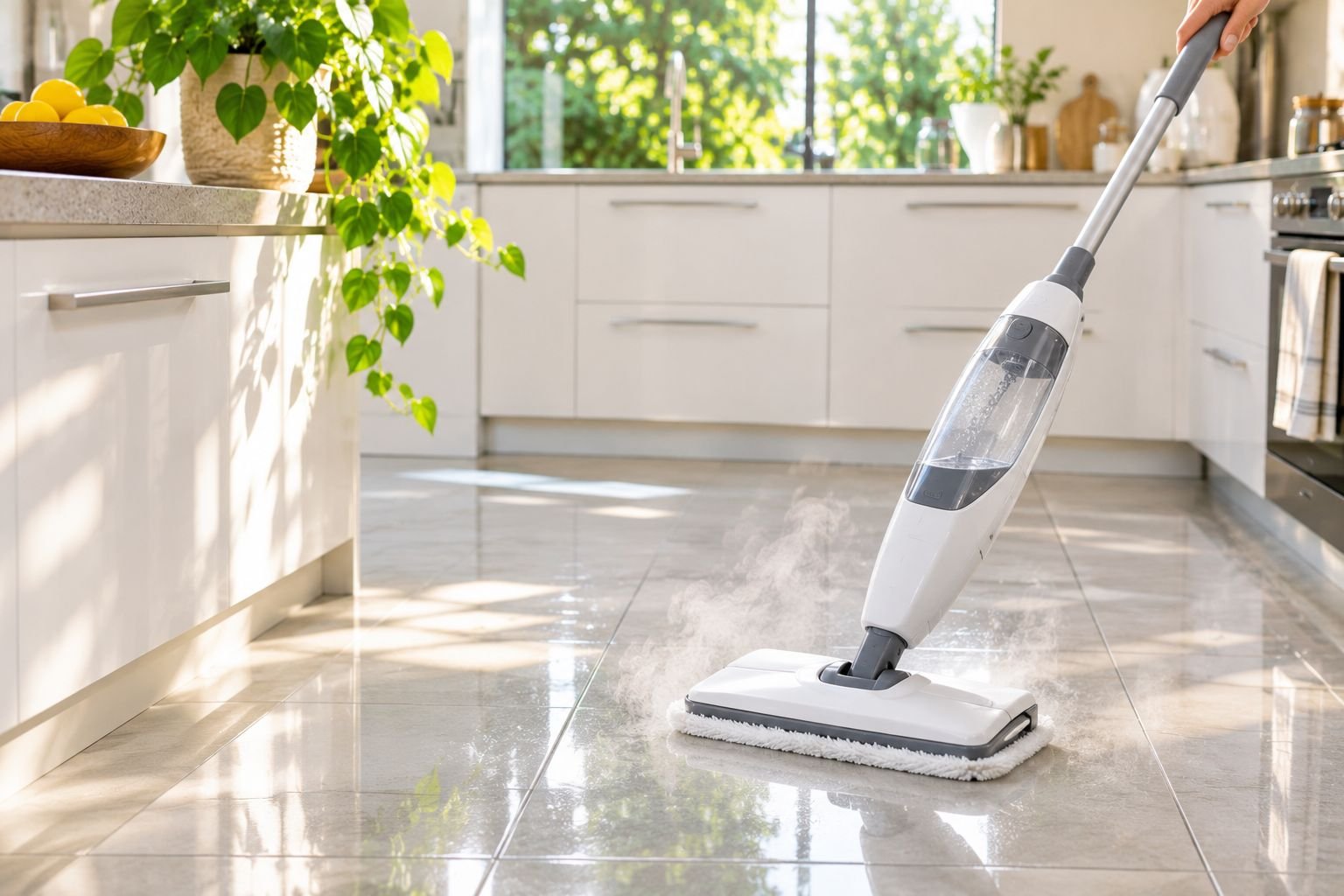
The short answer
For most tile, stone and sealed floors, the Bissell PowerFresh is the best steam mop: it has adjustable steam, a flip-down scrubber and more than 48,000 ratings. On a budget, the Shark S1000 is light and heats up fast. For sticky kitchens and grout, the Shark Steam & Scrub adds rotating scrub pads. Only steam sealed tile, stone, sealed concrete and steam-approved vinyl. Don't steam unsealed wood, laminate or most engineered floors, because heat and moisture can damage them and may void your floor warranty.
- Steam mops are best on ceramic and porcelain tile, sealed stone and sealed concrete.
- Avoid unsealed hardwood, laminate and most engineered wood. Check your floor's care guide.
- Vacuum or sweep first, so you're not pushing grit around.
- Use distilled water in hard water areas to reduce scale.
- Wash pads after each use and let the floor dry before walking on it.
A steam mop cleans hard floors with just water and heat. It loosens sticky spills, grease and grime without detergent, so there’s no residue and nothing to rinse. On tile, it leaves floors noticeably cleaner and shinier than a bucket and mop.
This guide picks the best steam mops for tile and sealed floors, explains which floors you should never steam, and shows you how to get streak-free results.
All picks were checked on Amazon US and Amazon Australia. These plug into the wall, so Australian readers are shown local models.
Before you buy: which floors can you steam?
| Floor | Steam mop? | Notes |
|---|---|---|
| Ceramic and porcelain tile | Yes | Ideal; great on grout too |
| Sealed natural stone | Usually | Check the sealer; avoid unsealed marble |
| Sealed concrete | Yes | Make sure it’s sealed |
| Vinyl / luxury vinyl plank | Sometimes | Only if the maker says it’s steam-safe |
| Laminate | No (usually) | Moisture can swell the joins |
| Hardwood and engineered wood | No | Heat and moisture can damage it |
| Unsealed or waxed floors | No | Steam strips wax and soaks in |
The American Cleaning Institute says flooring makers have their own recommended cleaning methods, and that using other products and machines can void your warranty. So check your floor’s care guide first. For timber, see our guide to how to clean hardwood floors.
Our picks at a glance
| Feature | Best budgetShark Steam Mop for Sealed Hard Floors (S1000) | Best overallBissell PowerFresh Steam Mop (1940A) | Best premiumShark Steam & Scrub All-in-One Hard Floor Cleaner (S8001) |
|---|---|---|---|
| Best for | Small homes and quick weekly mops on tile | Sealed tile, stone and vinyl floors in most homes | Grubby kitchens and grout lines that need scrubbing as well as steam |
| Price band | Budget | Budget | Premium |
| Steam levels | 1 | 3 | 3 |
| Scrubber | No | Yes | Rotating pads |
| Cord | Yes | Yes | Yes |
| Where to buy | Check price | Check price | Check price |
Best overall: Bissell PowerFresh
The PowerFresh is one of the best-selling steam mops on Amazon, with more than 48,000 ratings at 4.5 stars. It has three steam levels, a flip-down scrubber for stuck-on mess, and machine-washable microfibre pads. It heats up quickly and is easy to steer around kitchen islands and furniture.
The trade-offs: it’s corded, and the US model runs on 120V, so our Australian link shows local Bissell steam mops.
Best budget: Shark S1000
If you want a simple, light steam mop for weekly cleans, the Shark S1000 is easy to use and heats up fast. It comes with washable Dirt Grip pads and has nearly 20,000 ratings at 4.4 stars.
The trade-offs: there’s only one steam level and no scrubber.
Best premium: Shark Steam & Scrub
For grubby kitchens, sticky spills and grout lines, the Steam & Scrub has two rotating pads that scrub while it steams, so it shifts dried-on mess that flat steam mops slide over. It has several steam modes for different jobs.
The trade-offs: it costs more and is heavier than a flat steam mop.
How to steam mop properly
- Vacuum or sweep first to remove grit and hair.
- Fill with water. Use distilled or filtered water in hard water areas to reduce scale.
- Attach a clean, dry pad.
- Let it heat up, then start at the far corner and work towards the door.
- Keep moving. Don’t park the mop on one spot, especially on vinyl or sealed stone.
- Use the scrubber or high steam only on stubborn spots and grout.
- Change the pad when it looks dirty, and let the floor dry before walking on it.
- Unplug, empty the tank, and wash the pads after each use.
Steam mop vs regular mop
| Steam mop | Mop and bucket | Spray mop | |
|---|---|---|---|
| Cleaning power on tile | High | Medium | Medium |
| Chemicals needed | No | Usually | Usually |
| Drying time | Fast | Slow | Fast |
| Safe on hardwood | No | Damp only | Yes (with wood cleaner) |
| Best for | Tile, grout, kitchens | Big messes | Wood and quick cleans |
Steam mop tips
- Never steam a floor you’re unsure about. Test a hidden corner first, if the maker allows it.
- Don’t add vinegar or detergent unless the manual says you can.
- Descale the mop if steam output drops, following the manual.
- Hang pads to dry and keep a spare set so one is always clean.
More cleaning guides: the best robot mops and vacuums, the best carpet cleaners and how to clean hardwood floors.
Common questions
What floors can you use a steam mop on?
Sealed ceramic and porcelain tile, sealed natural stone, sealed concrete, and some vinyl or luxury vinyl plank floors if the maker says they're steam-safe.
Can you use a steam mop on hardwood floors?
Generally no. Steam and heat can damage wood and its finish and may void your floor warranty. Use a microfibre mop with a hardwood floor cleaner instead.
Can you steam mop laminate?
Most laminate makers advise against it. Steam can get into the joins and make boards swell or lift. Check your floor's care instructions.
Do steam mops sanitise floors?
Steam at high temperature can kill many germs when held on a surface long enough, but a moving mop doesn't sanitise everything. It's best for lifting grime without chemicals.
Can I add cleaner or vinegar to a steam mop?
Usually not. Most makers say to use only water, as chemicals can damage the mop and void its warranty. Some models have a separate scent disc or tank.
Why does my steam mop leave streaks?
A dirty or overloaded pad, too much steam, or detergent residue on the floor. Use a clean pad, a lower steam setting, and rinse floors once with clean water if you've used cleaners before.
How often should I change steam mop pads?
Use a clean pad each time you mop, and swap to a fresh one partway through large or very dirty areas. Wash pads hot and skip fabric softener.
Sources
Keep reading
The Best Carpet Cleaners for Home: Upright Washers and Spot Cleaners
The best carpet cleaner machines for home, upright vs portable spot cleaners, how to deep clean carpet like a pro, and how to remove pet stains properly.
The Best Handheld Vacuums for Crumbs, Cars and Pet Hair
The best cordless handheld vacuums for crumbs, cars, stairs and pet hair, what to look for in suction and battery life, and how to keep one working well.
How to Get Rid of Fruit Flies Fast (and Stop Them Coming Back)
How to get rid of fruit flies in your kitchen in a few days, the DIY vinegar trap that works best, where they're breeding, and the traps worth buying.