The Best Grow Lights for Indoor Plants (That Don't Turn Your Home Purple)
The best grow lights for houseplants, herbs and seedlings, how many hours to run them, how far from plants, and why white full-spectrum light beats purple.
We earn a commission if you buy through links on this page, at no extra cost to you. Learn more.
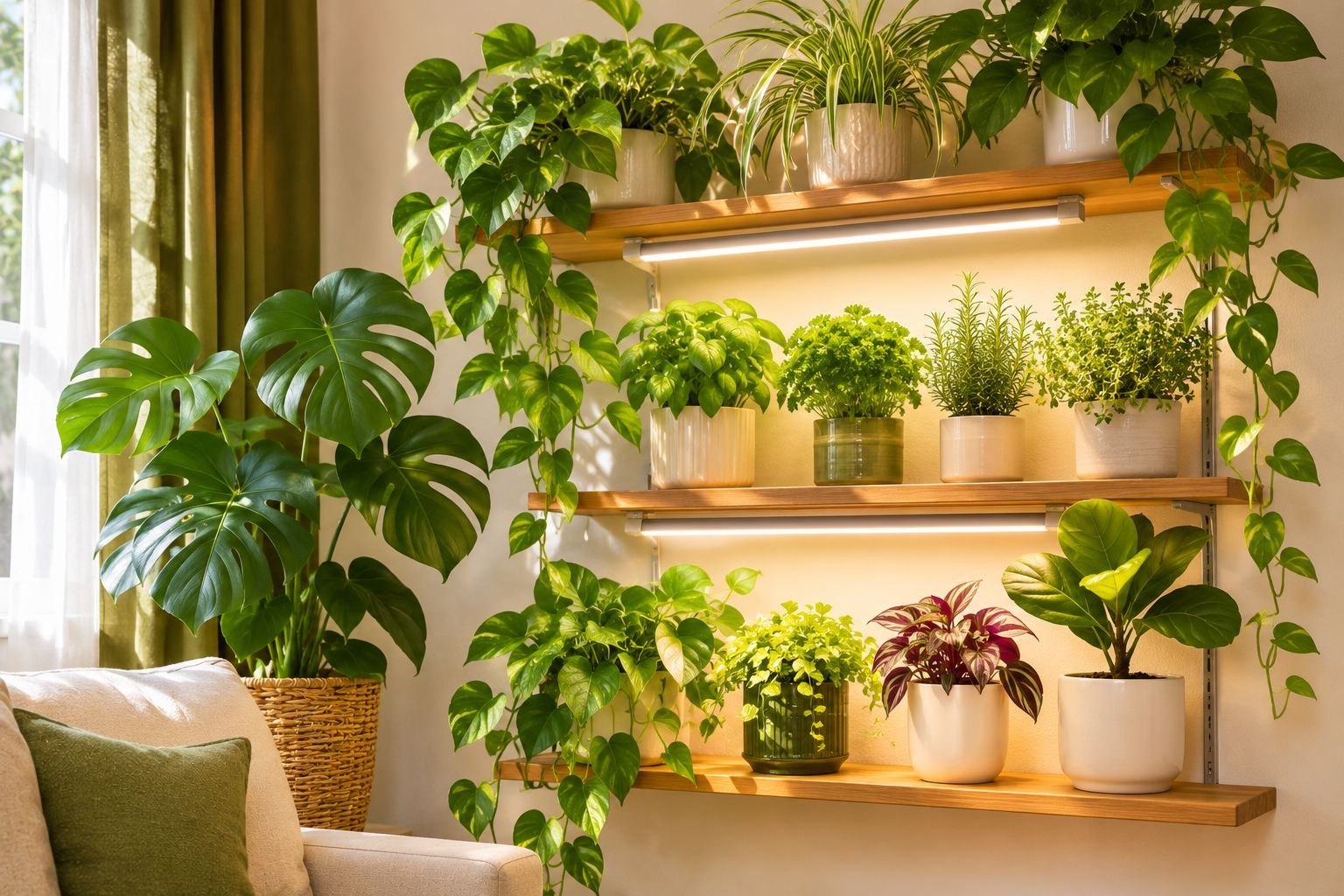
The short answer
The best grow light depends on what you're growing. For one or two houseplants in a dark spot, a clip-on light like SANSI's is cheap and easy. For a shelf of plants, herbs or seedlings, linkable T5 LED strips like Barrina's light the whole shelf evenly. For a big floor plant such as a fiddle leaf fig, a full-spectrum grow bulb in a normal lamp works well. Choose white full-spectrum light rather than purple, run lights for about 12–16 hours a day on a timer, and keep them roughly 15–60 cm (6–24 in) above the leaves, closer for seedlings.
- White full-spectrum LEDs grow plants well and look normal in your home. Purple lights aren't necessary.
- Most houseplants and herbs do well with 12–16 hours of light a day. Use a timer.
- Distance matters as much as power. Seedlings need light close; houseplants a little further away.
- Leggy, stretching growth means not enough light. Bleached or crispy leaves mean too much or too close.
- Plants need darkness too. Don't leave grow lights on 24 hours a day.
Most indoor plants die slowly from one cause: not enough light. A room that looks bright to us is often dim to a plant, especially away from windows and in winter. The signs are stretched, leggy stems, small pale leaves and plants leaning hard towards the window.
A grow light fixes that, and today’s LED grow lights are cheap, efficient and don’t have to turn your living room purple. This guide picks the best grow light for each situation and explains how long to run them and how far away to hang them.
Our picks at a glance
| Feature | Best for single plantsSANSI Clip-On Pot Grow Lights (2-pack) | Best for shelvesBarrina T5 Full-Spectrum LED Grow Light Strips (2 ft, 8-pack) | Best bulbSANSI Full-Spectrum LED Grow Light Bulb (36 W) |
|---|---|---|---|
| Best for | One or two struggling plants on a desk, shelf or windowsill | Plant shelves, seed starting and herb gardens | Big floor plants — use it in a regular floor lamp or pendant |
| Price band | Budget | Mid-range | Mid-range |
| Type | Clip-on / pot stake | Under-shelf LED strips | Screw-in bulb |
| Coverage | One plant each | A whole shelf | — |
| Timer | Yes | — | — |
| Colour | — | 5000K white full spectrum | — |
| Power | — | — | 36 W |
| Best for | — | — | Large single plants |
| Where to buy | Check price | Check price | Check price |
Best for single plants: SANSI clip-on pot lights
If you have one or two plants that are struggling in a dark corner, start here. These small grow lights stake into the pot and bend over the plant, with a built-in timer so you can set and forget them. They’re cheap, tidy and don’t need a shelf or lamp.
The trade-offs: each light covers one plant, and they aren’t strong enough for fruiting plants like tomatoes.
Best for shelves, herbs and seedlings: Barrina T5 strips
For a plant shelf, an indoor herb garden or seed starting, LED strips give you the most even light. The Barrina T5 tubes mount under each shelf and link together, so several run from one plug. They give a natural white light, run cool, and are hugely popular with seed starters. Rated 4.7 stars by thousands of owners.
The trade-offs: you need a shelf to mount them under, and there are more cables to tidy.
Best for big floor plants: SANSI full-spectrum bulb
Big statement plants like fiddle leaf figs, monsteras and birds of paradise need lots of light, but grow-light hardware can look out of place in a living room. A full-spectrum grow bulb screws into a normal floor lamp or pendant, so the light looks like any other lamp.
The trade-offs: your lamp must be rated for the bulb’s size and wattage, and the light is focused rather than spread out.
How to choose a grow light
1. Match the light to the job
| You’re growing | Best type |
|---|---|
| One or two houseplants | Clip-on or pot-stake light |
| A shelf of plants or herbs | LED strips under each shelf |
| Seedlings | LED strips or a panel, kept close |
| One big floor plant | Full-spectrum bulb in a floor lamp or pendant |
| Fruiting plants (tomatoes, chillies) | A strong LED panel or grow tent |
2. White full spectrum vs purple
White full-spectrum light grows plants well, looks natural in your home and lets you see whether leaves are healthy. Purple (red and blue) lights are mainly for grow tents and basements.
3. Brightness and coverage
Check the listing for the area a light covers at a given height. A small clip-on light covers one pot, and a 60 cm (2 ft) strip covers one shelf.
4. Timer and dimming
A built-in timer, or a cheap plug-in timer, makes consistent light effortless. Dimming helps you dial it back for low-light plants.
How long and how close: quick guide
| Plants | Hours per day | Distance from leaves |
|---|---|---|
| Low-light houseplants (pothos, snake plant, ZZ) | 8–12 | 30–60 cm (12–24 in) |
| Most houseplants (monstera, fiddle leaf fig) | 12–14 | 30–60 cm (12–24 in) |
| Herbs (basil, mint, parsley) | 12–16 | 15–30 cm (6–12 in) |
| Seedlings | 14–16 | 7–15 cm (3–6 in), raise as they grow |
These are starting points. Watch your plants and adjust:
- Stretching, pale, leggy: too little light. Move it closer or run it longer.
- Bleached patches or crispy edges: too much or too close. Raise it or shorten the hours.
- Compact, green, steady new growth: you’ve got it right.
Tips for success
- Use a timer. Consistency matters more than perfection.
- Rotate plants weekly so they grow evenly.
- Clean dust off leaves so they can use the light.
- Adjust watering. Plants under grow lights grow faster and may need water more often.
- In Australia, buy local models rated for 230–240 V with an Australian plug.
Lighting the rest of the room? See our guides to the best floor lamps for the living room and the best floor lamps for reading.
Common questions
Do grow lights really work for indoor plants?
Yes. Most homes, especially rooms away from windows and homes in winter, don't get enough light for plants to thrive. A good LED grow light gives plants the light they need to grow compact, green and healthy, and it lets you grow herbs and start seedlings indoors.
How many hours a day should a grow light be on?
About 12–16 hours a day for most houseplants, herbs and seedlings. Low-light plants like pothos and snake plants are happy with 8–12 hours. Always give plants a dark period, and use a timer so it's consistent.
How far should a grow light be from plants?
It depends on the light's strength. As a starting point, keep LED strips and small lights about 15–30 cm (6–12 in) above seedlings and herbs, and 30–60 cm (12–24 in) above houseplants. Check the manufacturer's guidance, then adjust. Stretching plants need the light closer; bleached or crispy leaves need it further away.
Can a normal LED bulb work as a grow light?
A bright daylight LED bulb helps low-light plants a little, especially if it's close. But a full-spectrum grow light puts out far more usable light for plants at the same wattage, so it works much better for herbs, seedlings and light-hungry plants.
Is purple or white grow light better?
Plants grow well under both, but white full-spectrum LEDs are much nicer to live with. They light your room normally and make it easier to see if plants are healthy. Purple (red and blue) lights are mostly used in dedicated grow tents.
Can I leave a grow light on 24 hours a day?
It isn't recommended. Most plants need a daily dark period to rest and grow properly, and constant light can stress them. A timer set for 12–16 hours on is the simplest approach.
Do grow lights use a lot of electricity?
Modern LED grow lights are efficient. A small clip-on light or a shelf of LED strips typically uses far less than a heater or fridge. Check the wattage on the listing, multiply by the hours you'll run it, and compare with your electricity rate.
Sources
Keep reading
The Best Floor Lamps for the Living Room: Torchiere, Arc and Shelf Lamps Compared
The best floor lamps for living rooms, how bright a lamp should be, warm vs cool light, where to put it, and how to layer lighting for a cosy room.

Best Floor Lamps for Reading: Bright, Glare-Free Picks for Every Budget
The best floor lamps for reading: a budget gooseneck, a classic pharmacy lamp and a full-spectrum pick, plus how bright reading light should be.
The Best Air Fryer Toaster Oven: Combo Picks That Replace Two Appliances
The best air fryer toaster oven combos, how they compare with basket air fryers, what size you need, and which save bench space, with picks for every budget.